Made JUPITER PLUS Bedienungsanleitung

FQ 47B
V 1.0 –05.03.2018
M A D E
S.A. au capital de 270 130 €
167, Impasse de la garrigue
F 83210 LA FARLEDE
Tél. : +33 (0) 494 083 198 - Fax : +33 (0) 494 082 879
E-mail : contact@made-sa.com - Web : www.made-sa.com
USER GUIDE
JUPITER+
WARMING: Read these instructions for use before using the device
GU_JUPITER+_V_1_06_EN.docx

2 / 30
M O D I F I C A T I O N ’ S D I R E C TO R Y
Rev.
Subject of Amendments
Date and Author
1.04
1.05
1.06
CRÉATION
Graphic charter update
A5 format version
04/2014 P.COSTE
12/2015 L. ZOMERO
03/2018 C. DELLES
These instructions for use are important for your safety. Read it
attentively in its entirety before using the device, and preserve it to
be able to refer it later.

3 / 30
SUMMURY
1. SAFETY INFORMATION .................................................................................................5
1.1. Safety advice...................................................................................................................5
1.2. Use of safety instructions..............................................................................................5
1.3. Warming Labels..............................................................................................................6
2. OVERVIEW ......................................................................................................................7
2.1. Working Principle ...........................................................................................................7
2.2. Composition....................................................................................................................8
2.2.1. Transmitter......................................................................................................................8
2.2.2. Receiver...........................................................................................................................9
2.2.2.1. Standard Sensors......................................................................................................10
2.2.2.2. Optional Sensor.........................................................................................................11
3. IMPLEMENTATION........................................................................................................12
3.1. JUPITER+ TRANSMITER..............................................................................................12
3.1.1. Overview of the Transmitter.........................................................................................13
3.1.2. Transmitter general functioning..................................................................................14
3.1.2.1. Power supply .............................................................................................................14
3.1.2.2. Transmitter functions................................................................................................15
3.1.2.3. Transmitter connection.............................................................................................15
3.1.3. Precautions for using the transmitter.........................................................................16
3.2. JUPITER+ RECEIVER ...................................................................................................17
3.2.1. Use of receiver..............................................................................................................20
3.2.1.1. Pre-identification mode.............................................................................................21
3.2.1.2. Core identification in open circuit and continuity to S1 Transmitter mode .........22
3.2.1.3. Core identification and continuity in short circuit mode .......................................23
3.2.1.4. Location in short circuit for 4 drivers of identical section mode (option)............24
3.2.2. Batteries ........................................................................................................................25
4. TECHNICAL CARACTERISTICS...................................................................................26
5. MAINTENANCE AND GUARANTEE.............................................................................27
5.1. Reminder .......................................................................................................................27
5.2. Recycling.......................................................................................................................27
5.3. Guarantee......................................................................................................................27
5.3.1. Limitation.......................................................................................................................28
5.3.2. Claims limitations.........................................................................................................29

4 / 30
5.4. Copyright.......................................................................................................................29
6. ANNEXE.........................................................................................................................30
6.1. CE conformity declaration ...........................................................................................30

SAFETY INFORMATION
5 / 30
This document establishes the user guide of the JUPITER +. It
describes the implementation of the device, as well as the various
ways of functioning to facilitate his use.
1.SAFETY INFORMATION
1.1.Safety advice
Please read this manual carefully before unpacking, configuring or
using this equipment. Note all indications of danger and other
warnings. The failure to observe these recommendations could result
in serious injury to the operator or could damage the equipment. To
ensure that the protection provided by this equipment is appropriate,
do not use or install it other than in accordance with the conditions
indicated in this manual.
Do not dismantle the cases. This operation is limited exclusively to
personnel qualified by MADE.
1.2.Use of safety instructions
DANGER: Indicates a situation eminently or potentially dangerous
that, if not avoided, would cause serious or deadly injuries.
ATTENTION: Indicates a potentially dangerous situation that could
cause superficial or moderate injuries.
Remark: Information that merits attention

SAFETY INFORMATION
6 / 30
1.3.Warming Labels
Read all labels and wording affixed to the instrument. Bodily injuries or
equipment damage could occur if these instructions are not respected.
Symbol requiring reference
to the instruction manual for
instructions concerning
operation or safety
recommendations.
Class I –Earthing mandatory
IP Std. –Degree of protection
IK Std. –Degree of protection
IK 07
IP 21

OVERVIEW
7 / 30
2.OVERVIEW
2.1.Working Principle
Identification of cables in a trench, gutter and in cable shelf.
With short-circuited ends
Identifying the phases and checking cable continuity to
transmitter S1
With short-circuited ends (closed circuit)
With open-circuit ends.
The configuration required for each of these modes is described in
this document.
Each of the functions is usually carried out on unpowered MV & LV
cables (customer loads on-line).
The signals and the physical principles used are common for each
function.
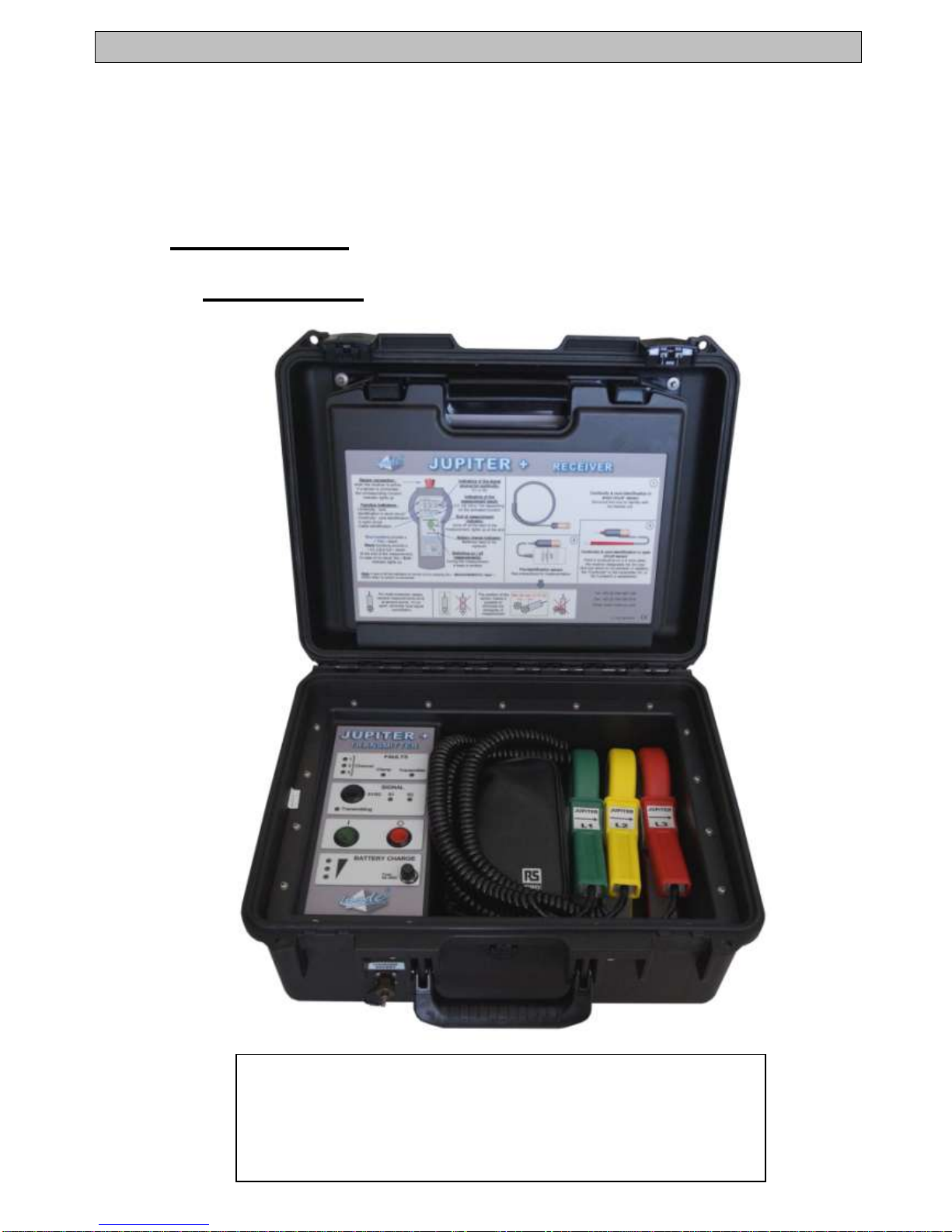
The JUPITER system is made up of a Transmitter and a Receiver.
The Transmitter is in a shock-proof carrying case which also
contains the various accesories. The connector for the current
injection clamps is on the front face of the Transmitter.
The Receiver is in a soft carrying case which fits into the Transmitter
case. This also contains the 3 sensors used for cable and
conductor/phase identification:
Cable identification
Continuity and core identification in open circuit.
Continuity and core identification in short circuit
Co
rdo
n
ch
arg
eur
réc
ept
eur

OVERVIEW
8 / 30
Option :
•Core identification in short circuit adapted for LV 4 conductor
cables, with visually unidentifiable neutral
2.2.Composition
2.2.1.Transmitter
3 current clamps with their connecting cable*
220V~ supply cable
1 Short-Circuiting cable

OVERVIEW
9 / 30
2.2.2.Receiver

OVERVIEW
10 / 30
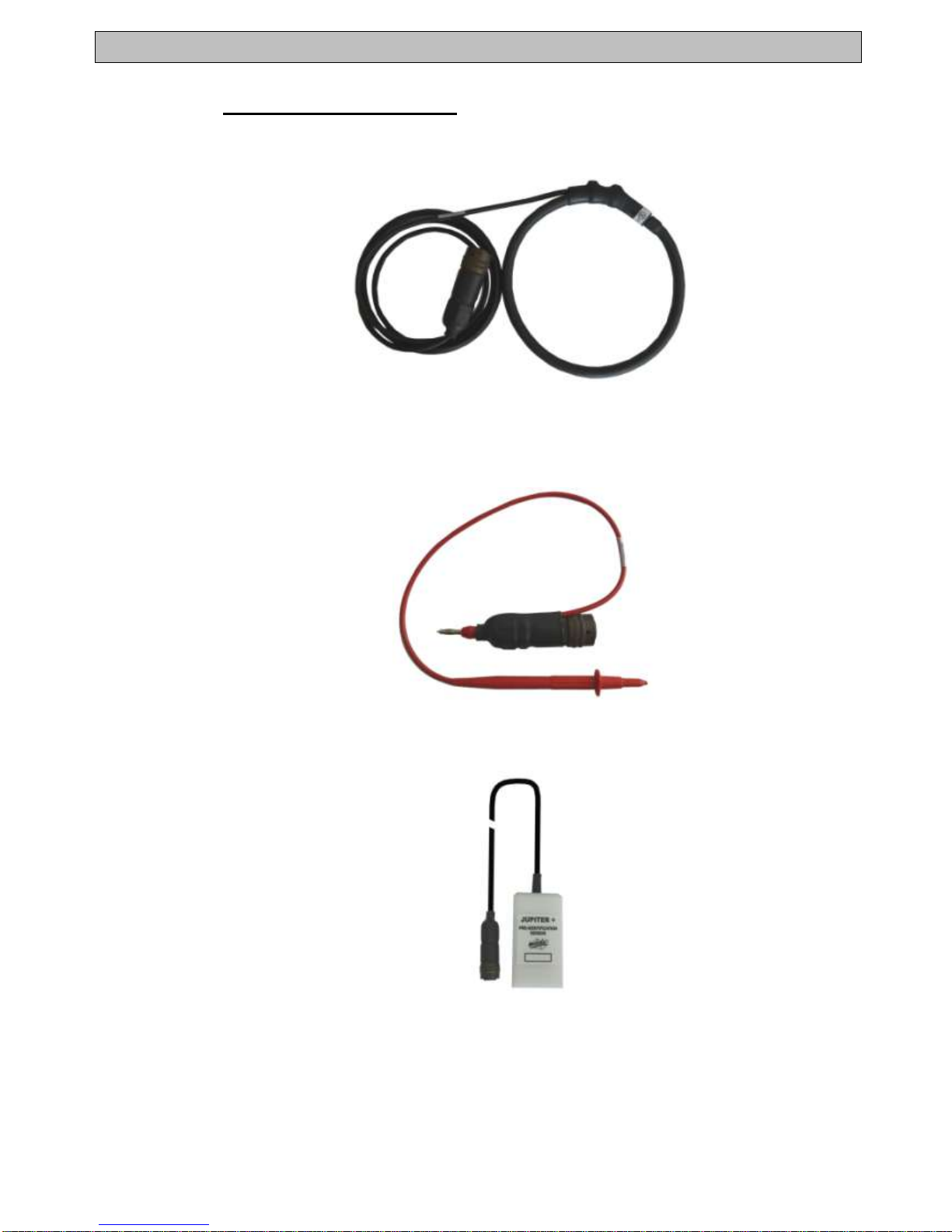
2.2.2.1.Standard Sensors
•Sensor for « Core identification, short-circuited ends » :
•
•Sensor for « Core identification, open circuit ends » :
•Sensor for identification :
Inhaltsverzeichnis
Beliebte Prüfgeräte Handbücher anderer Marken

SMART
SMART KANAAD SBT XTREME 3G Series Bedienungsanleitung

Agilent Technologies
Agilent Technologies BERT Serial Bedienungsanleitung

Agilent Technologies
Agilent Technologies N3280A Bedienungsanleitung

Vernier
Vernier Go Direct Voltage Bedienungsanleitung

Lifeloc
Lifeloc R.A.D.A.R. Bedienungsanleitung

Fluke
Fluke T5-600 Bedienungs- und Montageanleitung

PCB Piezotronics
PCB Piezotronics 8159-0112A Bedienungsanleitung

BW Technologies
BW Technologies MicroDock II Bedienungsanleitung

Sun Nuclear
Sun Nuclear 1027 Bedienungsanleitung

Biomark
Biomark HPR LITE READER Bedienungsanleitung

Hioki
Hioki 3169-20 Bedienungsanleitung

Ashcroft
Ashcroft ATE-100 Bedienungsanleitung