
MASPRA EP-45G Bedienungsanleitung

User manual
EP-45G
Page 2of 52
Table of contents
1. Safety regulations
1.1. Explanation of symbols used
1.2. Electrical safety
1.3. Electrostatic charge
(spark or flame formation)
2. Summary of Application
2.1. Area of operations
2.2. Coating materials
3. Device description
3.1. Airless procedure
3.2. Function of the device
3.3. Transport in the vehicle
4. Commissioning
4.1. Cleaning of preservatives
4.2. Preparation for commissioning
4.3. Commissioning
5. Spray technology
6. Handling of the high-pressure hose

Page 3of 52
7. Work interruptions/pressure drain method
8. Clean Up
8.1. General and equipment cleaning from the outside
8.2. Intake filter
8.3. Clean high-pressure filters
8.4. Airless gun clean
Quick Start Manual page 36
9. Help with faults
10. Maintenance
10.1. Clean high-pressure filters
10.2. High pressure hose
11. Repairs to the device
11.1. Relief valve
11.2. Inlet / outlet valve
12. Attachments
12.1. Nozzle selection
12.2. Maintenance and cleaning of airless reversing nozzles
Warranty

Page 4of 52
Attention
1. Safety regulations for airless spraying
1.1.
Explanation of the symbols used
This user manual contains information that the user must thoroughly
work through before using the device. In areas marked with the
following symbols, work extra carefully and observe all safety
instructions.
This symbol indicates a potential danger that
can lead to death or serious injury. Here you
will find important security information.
This icon indicates a potential danger for you
or the device. Under this icon you will find
important information on how to avoid
damage to the device and risk of injury.
Danger of skin injection

Page 5of 52
DANGER: Injury by liquids under
pressure
A high-pressure liquid, such as that
produced by this device, can penetrate the
skin and penetrate into the underlying
connective tissue, leading to serious injuries
and even amputation. Do not treat a splash
injury as a harmless cut. In the event of a
skin injury caused by coating material or
solvent, consult a doctor immediately. For
fast, expert treatment, inform the doctor
about the coating material or solvent used.
Fire hazard due to solvents and paint va-
pors
Risk of explosion due to solvents, paint va-
pors and unsuitable materials
Inhalation of harmful vapors
Notes contain important information that
should be noted.
,

Page 6of 52
Precautions:
•NEVER hold the spray gun on body parts.
•NEVER touch the liquid jet with body parts.
•NEVER touch a leak in the pressure hose with the body.
•NEVER hold your hand in front of thenozzle of the spray
gun. Gloves do not provide safe protection against injury
from injected liquids.
ALWAYS lock the spray gun trigger, turn off the pump
and completely relax the pressure before performing
maintenance and cleaning, inspections, nozzle
changes or similar work or leaving the device
unattended. Even after switching off the engine, the
device is still under pressure. The valve PRIME /
SPRAY (relief/bypass/pre-fill / spray valve) must stand
in its relief /target positions to relax the system
pressure.
•ALWAYS put on the nozzle guard when spraying work
is carried out. The nozzle protection represents a cer-
tain protection, but is primarily intended as a warning
device.
•ALWAYS remove the spray nozzle before cleaning or
rinsing the system.
•NEVER use a spray gun without a functional trigger
lock and without a protective bar.
•All accessories must be approved for at least the max-
imum operating pressure range of the sprayer. These
include spray nozzles, spray guns, extensions and
hoses.

Page 7of 52
Danger:
High pressure hose
Due to wear, buckling and inappropriate use, leaks
can form in thepaint hose. Through a leak, fluid can
be injected into the skin. Thoroughly check the hose
before use.
Precautions:
•Avoid sharp bending or bending of the high-pressure hose,
smallest bending radius about 20 cm.
•Do not run over the high-pressure hose, as well as protect
against sharp objects and edges.
•Replace the damaged high-pressure hose immediately.
•Never repair a defective high-pressure hose yourself!
•Electrostatic charging of the spray gun and high-pressure
hose is discharged via the high-pressure hose. Therefore,
the electrical resistance between the connections of the
high-pressure hose must be equal to or less than one
megaohm.
•For reasons of function, safety and service life, use only
MASPRA-Original-replacement high pressure hoses.
•Before each use, check all hoses for incisions, leaks, chafing
points or curved surfaces. Check the clutches for integrity and
firm fit. Replace hoses immediately if any of the above faults
are detected. Never repair a paint hose. Replacea defective
hose with a grounded high-pressure hose.
•Be sure to lay spray hoses in such a way that the risk of
slipping, tripping and falling over is minimized
Warning!

Page 8of 52
Attention: Risk of injury due to injection!
Airless devices develop extremely high spray
pressures.
Never bring fingers, hands or other body parts into
contact with the spray jet!
Never point the spray gun at yourself, people and
animals.
Never use the spray gun without spray jet contact
protection.
Do not treat a splash injury as a harmless cut.
In the event of a skin injury caused by coating
material or solvent, consult a doctor immediately for
fast, expert treatment.
Tell the doctor about the coating material or solvent
used.
1

Page 9of 52
According to the operating instructions, the following
points must be observed before each commissioning:
1.
Faulty devices must not be used.
2.
Securing the spray gun with a safety lever on the trigger
guard.
3.
Ensure grounding.
4.
Check the permissible operating
pressure of the high-pressure hose
and spray gun.
5.
Check all connecting parts for tightness.
Instructions for regular cleaning and maintenance of
the device must be strictly adhered to.
Before all work on the device and at every break from
work, observe the following rules:
1.
Spray gun and high-pressure hose pressure relief.
2.
Securing the spray gun with a safety lever on the trigger
guard.
3.
Turn off the device.
Pay attention to
safety!
Page 10 of 52
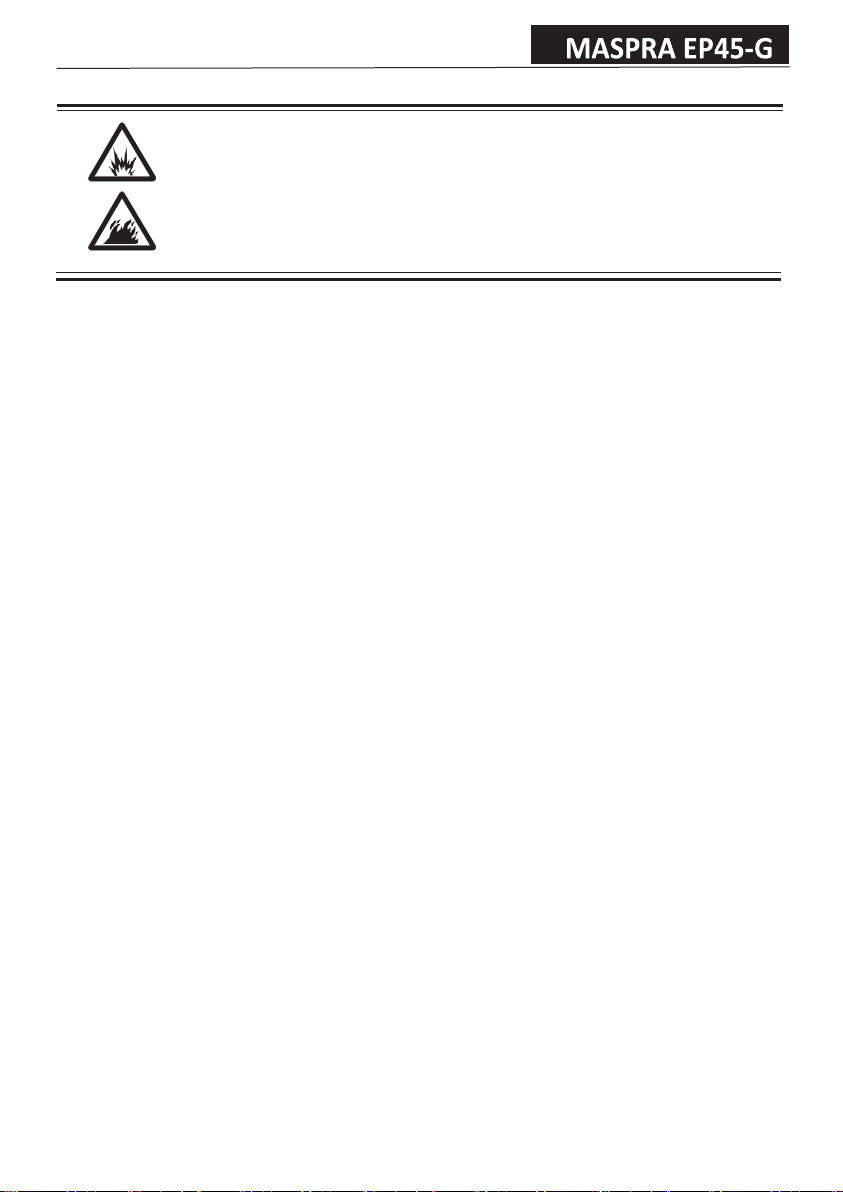
Hazard: Explosion and fire hazard
Flammable vapors, such as Fumes from solvents and
paints can ignite or explode in the work areas.
Precautions:
•Do not process materials with a flash point below 38 °C (100 °F).
The flash point is the temperature at which aliquid develops so
many vapors that they can ignite.
•Do not use the device in production facilities that are covered by
the Explosion Protection Ordinance.
•Ensure good extraction and supply of fresh air so that no flamma-
ble fumes accumulate in the spray area.
•Exclude all ignition sources such as sparks from electrostatic dis-
charge, electrical appliances, open flames, ignition flames, hot ob-
jects and sparks by closing and disconnecting power cords or actu-
ating work light switches.
•Do not smoke in the spray area.
•Place the sprayer at a sufficient distance from the object to be
sprayed in a well-ventilated area (use an extension hose if neces-
sary). Flammable fumes are often heavier than air. The area above
the ground must be particularly well ventilated. The pump contains
parts in which arc formation cannot be ruled out and which ignite
vapours through sparks.
•The objects to be sprayed and the equipment in the spray area
must be carefully grounded to avoid sparks caused by electrostatic
discharges.
•Use only conductive or grounded high-pressure liquid hoses. The
spray gun must be grounded via the hose connections.
•The power cord must be connected to aprotective contact
circuit (for electrical appliances only).
•To flush the device, always spray into a separate metal con-
tainer with low pump pressure and removed spray nozzle.
Inhaltsverzeichnis


