
Powermat PM0748 Bedienungsanleitung
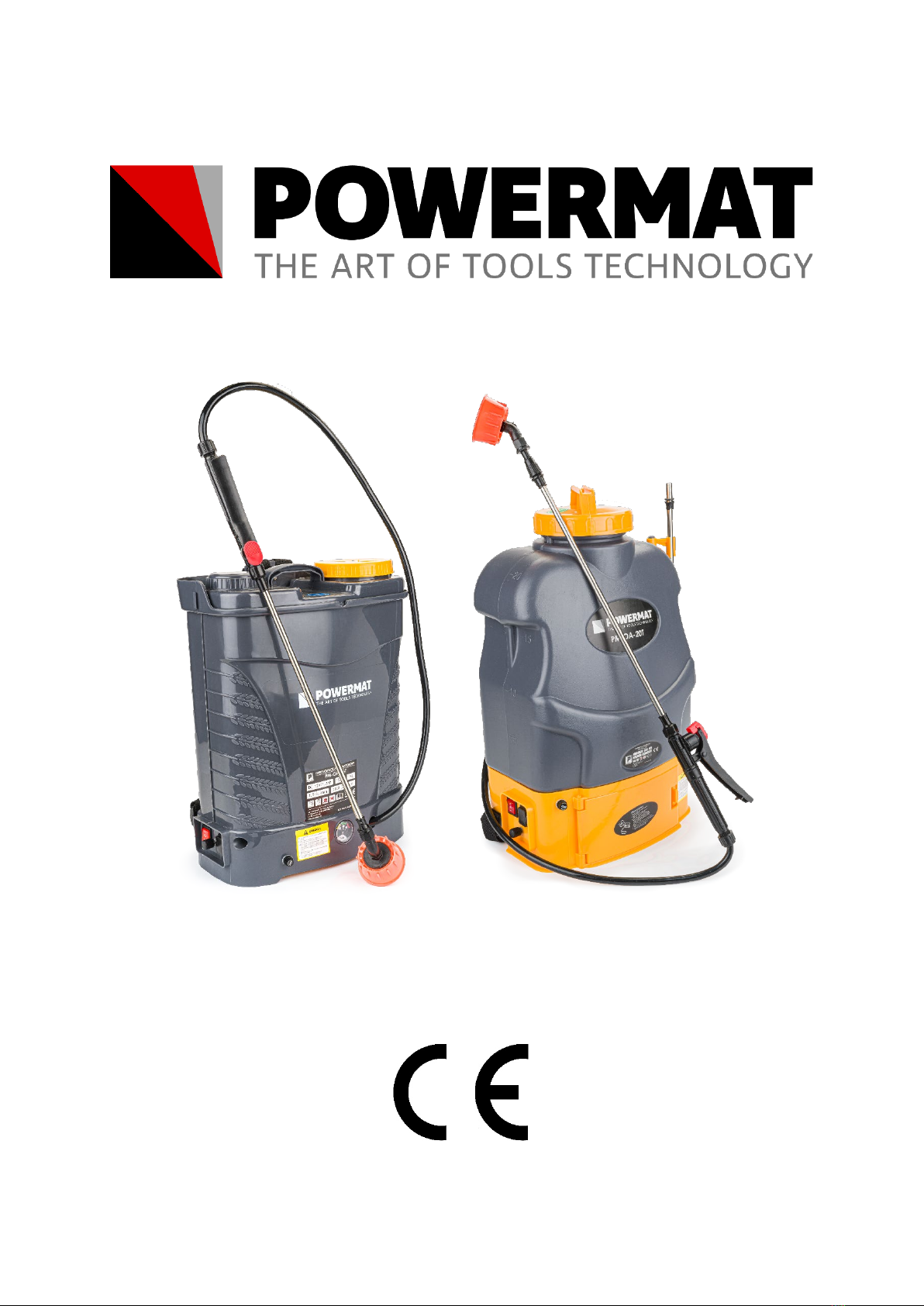
PM0748; PM0749
USER MANUAL
Battery sprayer
PM-OA-16T / PM-OA-20T
ORIGINAL MANUAL

TABLE OF CONTENTS
TABLE OF CONTENTS ............................................... . ................................................. . ................................................. . .................... 2
WARNING / INFORMATION SYMBOLS .............................................. .................................................. .................... 3
APPLICATION OF THE DEVICE .............................................. .. ................................................ .. .......................................... 3
TECHNICAL DATA ................................................ .................................................. .................................................. ......... 4
SECURITY ................................................. .................................................. .................................................. ......... 4
General safety rules ............................................... .................................................. .................................................. ................. 4
Concerning working with the sprayer ............................................. . ................................................. . ................................................. . .............. 5
About electrical safety ............................................... .................................................. .................................................. .. 6 For cordless
tools ............................................ .. ................................................ .. ............................................ 7
Concerning the position ............................................... . ................................................. . ................................................. . .............................. 7
Concerning personal security ............................................... .................................................. .................................................. ...... 7
For proper operation ............................................... .................................................. .................................................. ................. 8
Safety rules for contact with chemical plant protection products ......................................... ......................................... 8
Safety rules for the battery and the electrical system ......................................... .. ................................................ .. ......... 9
Protective clothing ................................................ .................................................. .................................................. ..................................... 10
Transporting the sprayer ............................................... . ................................................. . ................................................. . .......................... 10
Safety rules before starting and during work ........................................... .................................................. ................ 10
Safety rules for the maintenance and repair of the device ........................................ ... ............................................... ... ............. 11
DEVICE DESCRIPTION ................................................ .................................................. .................................................. ........ 12
PRELIMINARY STEPS ................................................ .................................................. .................................................. ..13
HOW TO USE THE DEVICE ............................................. ... ............................................... ... ............................................... ... 13
Battery charging ................................................ .................................................. .................................................. ......................... 13
Installing the battery ............................................... . ................................................. . ................................................. . .............................. 13
Removing the battery ............................................... . ................................................. . ................................................. . .......................... 14
Installation of accessories ............................................... . ................................................. . ................................................. . ................................ 14
Preparing the spray liquid, filling the liquid tank ......................................... .. ................................................ ... ........................ 15
Filling the liquid tank .............................................. . ................................................. . ................................................. . ........................................... 15
Recommended volumes of the working liquid ............................................ .. ................................................ .. ................................................ ... ................................... 15
Preparation of the working liquid ............................................. .. ................................................ .. ................................................ ... ........................................ 15
Identification of the chemicals used ............................................. . ................................................. . ................................................. . ............ 16
Operation of the cordless knapsack sprayer ............................................ .. ................................................ .. ............................... 16
Application of the sprayer .............................................. .. ................................................ .. ................................................ ... ........................................... 16
Outlet nozzle, fluid flow ............................................. .................................................. .................................................. ....................................... 16
WORKING WITH SPRAYER ............................................... . ................................................. . ............................................... 17
End of spraying, consumption of spray liquid in the tank ....................................... ... ............................................... ... .............................. 18
SPRAYER CARE AND MAINTENANCE .............................................. .................................................. ................... 19
General principles of operation and maintenance of the pressure sprayer ........................................ ... ............................................... ... ................ 19
Checking the spray liquid output ............................................. . ................................................. . ................................................. . ...... 19
Emptying and cleaning the spray liquid tank ........................................... . ................................................. . ...................................... 19
Storing the device ............................................... . ................................................. . ................................................. . ................... twenty
SERVICE ................................................. .................................................. .................................................. ....................... twenty
DISPOSAL OF USED DEVICES .............................................. . ................................................. . .................................. twenty
MANUFACTURER'S DATE ................................................ .................................................. .................................................. .... 21
DECLARATION OF CONFORMITY ............................................... . ................................................. . .............................................. 22
2
WARNING / INFORMATION SYMBOLS
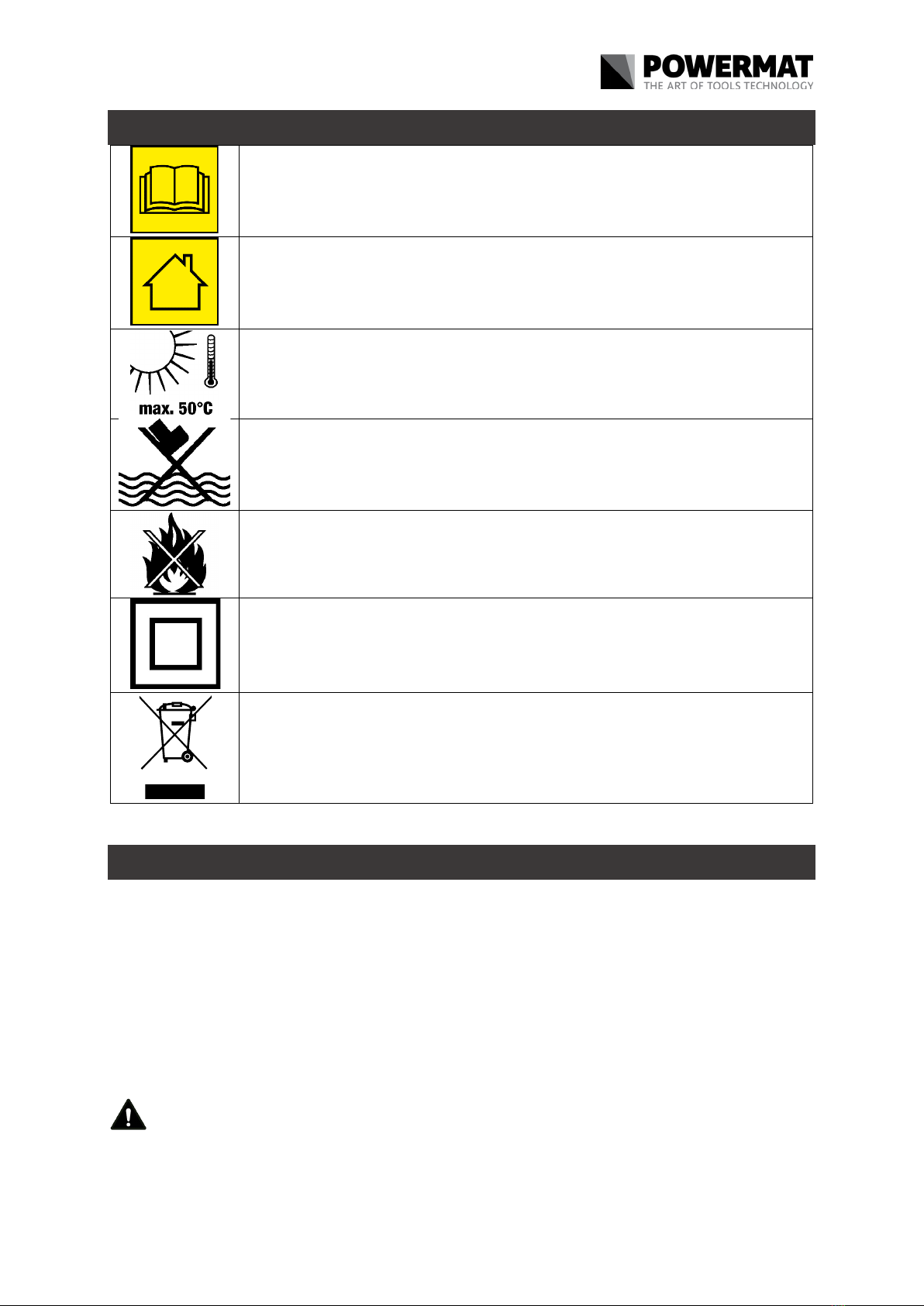
CAUTION: Before using the device, carefully read the instruction manual and safety
recommendations. Keep the instructions.
CAUTION: Only use the charger in dry rooms.
CAUTION: Do not expose the battery to temperatures above 50ABOUTC.
CAUTION: Do not expose the battery to water.
CAUTION: Do not use the battery in an explosive or flammable environment.
Insulation class II
SIGN OF CROSSED BASKET: Obligation to separate collection of used equipment and a ban on
throwing it away with other waste. See the section "REMOVAL
USED DEVICES "
PURPOSE OF THE DEVICE
Backpack battery sprayer is designed to carry out protective and care treatments with water solutions
of artificial fertilizers, insecticides, fungicides and herbicides. It is also dedicated to the application of
ecological preparations based on paraffin oil and plant preparations. It is recommended to use one
sprayer for the selected group of agents.
Manufacturers' recommendations on product labels should be followed. Use only agents that are
approved for use by local regulations. Do not use any liquid substances with a temperature above
40 ° C. The sprayer should be used as intended.
The sprayer must not be used for other purposes, eg for painting!
3
CAUTION !!! It is forbidden to use chemically active agents, including acids and bases, disinfecting
and impregnating agents, solvents and agents containing solvents, cleaning agents and
petroleum derivatives.
For safety reasons, the device must not be used by children and adolescents under 18
years of age, and by people under the influence of alcohol, drugs or other intoxicants.
Persons who have not read this manual should carefully read it
reading before using the device for the first time.
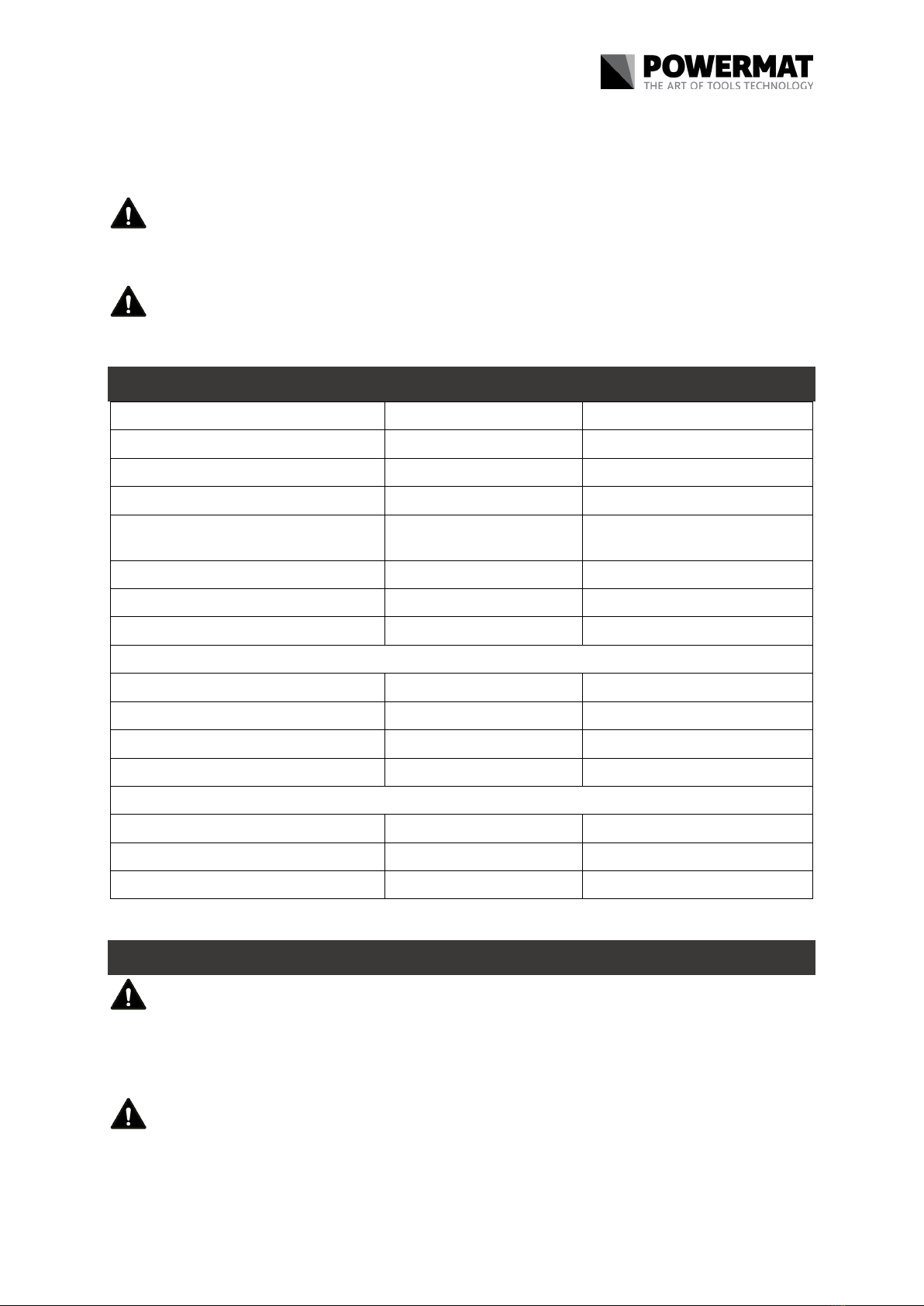
TECHNICAL DATA
Model PM-OA-16T PM-OA-20T
Tank capacity 16l 20l
Working pressure 1 - 4.5 bar 1 - 4.5 bar
Pump type membrane membrane
Maximum spraying time when
fully charged 8h
12h
8h
12hBattery charging time.
Capacity on a single nozzle.
Efficiency on a double nozzle
1.5 - 1.6 [l / min]
1.8 - 3 [l / min]
1.5 - 1.6 [l / min]
1.8 - 3 [l / min]
PM-OA-12VBT battery
Nominal voltage
Battery capacity
Battery type
Maximum charging time
12V DC 12V DC
15Ah 15Ah
lead cadmium lead cadmium
8h 8h
PM-OA-12VCT charger
Supply voltage
Output voltage
230V / 50Hz 230V / 50Hz
12V
1.2A
12V
1.2ACharging current
SECURITY
DANGER: TO REDUCE THE RISK OF ELECTRICAL SHOCK, FIRE, AND PERSONAL INJURY, USE THIS
PRODUCT IN ACCORDANCE WITH THE FOLLOWING INSTRUCTIONS.
ABOUTGENERAL SAFETY RULES
These operating instructions should be read carefully before the first start-up of the device, and
familiarize yourself with the instructions contained therein on proper operation
4

operation of the device and safety rules, and then keep it in a safe place for
inspection.
1. Use the device with particular care, observing the following safety rules. Failure to follow the
safety rules may result in a risk of serious injury to the operator and health complications. The
operating instructions should always be available when the device is in use.
2. The device may be operated and used only for its intended purpose
3. The device must not be used by children. Young people under the age of 18 may only use the
device under adult supervision and training.
4. There should be no bystanders or animals in the work area. Never point the nozzle towards
people or animals. Fluid escaping under high pressure is a potential hazard and can cause
serious injury. The operator of the device is responsible for the safety of third parties and
animals in the vicinity
5. The device may only be left or lent to people who are familiar with the operating manual and safety rules.
The operating instructions should always be handed over to the persons to whom the device was lent or
handed over.
6. Only physically fit persons are allowed to operate the device. Fatigue or illness can make you less
alert and distracted.
7. Persons under the influence of alcohol, drugs or drugs reducing psychophysical integrity are not
allowed to work with the device
8. The device may only be used when it is in good technical condition. Always check the
condition of the device before putting it into operation.
9. Only original accessories supplied by the manufacturer, intended for a specific model of the
device, are allowed to be used.
10. Reliable operation of the device and compliance with the principles of safe use also depend on
the quality of spare parts. Only original spare parts should be used, which are manufactured
using appropriate technology, which guarantees the highest possible quality in terms of
material, dimensions, functionality and safety. Original spare parts and accessories can be
ordered from your distributor and service centers.
11. Failure to use original parts may void the warranty conditions if they were the cause of damage.
When the device is not used, it must be stored and stored in a way that does not endanger the
danger of unauthorized persons.
12. The device may only be used under the safety rules and taking into account the risk of possible
accidents.
13. The operator of the device is responsible for the safety or damage to property in the area.
DFOR WORKING WITH THE SPRAYER
1. It is forbidden to work with the sprayer: children, pregnant women, sick people taking medication, after
drinking alcohol and people taking substances that limit concentration.
2. During the first start-up, check the tightness and correct operation of the sprayer using
clean water.
3. When working with chemicals (also when preparing preparations and destroying
packaging), it is necessary to use special protective clothing: rubber boots, gloves, coat,
hat, safety glasses, mask or half-mask.
5

4. Work with chemicals should not be performed on an empty stomach, and it is forbidden to eat, drink or smoke while
working. It is also forbidden to drink alcohol on the eve and after finishing work.
5. Residual liquids must not be discharged into open waters, sewage systems or biological sewage treatment plants. These
comments also apply to the fluid used to rinse the tank and other components of the sprayer.
6. The used sprayer should be taken to the local chemical waste disposal point.
7. The used battery pack with the control panel should be taken to a collection point for used
electrical and electronic devices and batteries.
8. The person operating the sprayer should absolutely follow the recommendations
contained on the packages of chemical agents. In case of poisoning, consult a doctor.
9. It is unacceptable to work with a faulty sprayer or with any leakage. The sprayer must not be
subjected to impacts.
10. All service activities should be performed after decompression of the sprayer.
11. Thoroughly wash the sprayer after each use and before servicing.
12. It is not allowed to use the sprayer for purposes other than those specified in the operator's manual.
13. The sprayer must not be stored filled with liquid and under pressure.
14. It is unacceptable to use: liquids with a temperature above 40 ° C, substances defined
as explosive, flammable, toxic and oxidizing.
15. It is forbidden to introduce unauthorized changes to the sprayer and to use it contrary to its
intended use. This can poison people and animals, contaminate the environment, damage
the sprayer or serious accidents.
16. After finishing work, change your clothes (clean protective clothing), wash your hands and face, rinse your mouth
and throat, and clean your nose.
17. After use, rinse the sprayer several times with water.
18. The user is solely responsible for any damages resulting from non-compliance with the
rules contained in this manual.
19. Always check the battery charge before starting work.
20. It is forbidden to direct the sprayer lance and spray the liquid towards the face.
21. During the use and storage of the sprayer, it should be protected against access of
unauthorized persons, especially children.
22. If other products are used, make sure that they can be used in the sprayer and that they are
not harmful to the sprayer, people and the environment.
23. NOTE! The sprayer control package is resistant to splashes and increased levels of moisture, it is not
resistant to flooding and frequent contact with water.
DELECTRICAL SAFETY
Equipment plugs must match the outlets. Never modify the plug in any way.
- Lack of modifications to plugs and socket outlets reduces the risk of electric shock.
a) Avoid body contact with earthed or compacted surfaces, such as pipes, heaters, central heating
radiators and refrigerators.
- If you touch earthed or short-circuited parts, the risk of electric shock increases.
b) Do not expose the tool to rain or wet conditions.
6

- If water enters the tool, the risk of electric shock increases.
c) The connection cables must not be strained. Never use the power cord to carry, pull or pull the
power plug from the socket. Keep the power cord away from heat, oil, sharp edges or moving
parts.
- Damaged or entangled cords increase the risk of electric shock.
DABOUT BATTERY POWER TOOLS
a. Charge the batteries only in chargers recommended by the manufacturer.
- Using chargers to charge a type of battery other than the one for which they are
intended may cause a fire.
b. Use only the rechargeable batteries intended for electrical appliances.
- Using other batteries may lead to personal injury and a fire hazard.
c. Store unused batteries away from paper clips, coins, keys, nails, screws and other small
metal objects that could bridge the contacts.
- A short circuit between the battery terminals may cause burns or fire.
d. Liquid may leak from the battery if mishandled. Avoid contact with this liquid.
- In case of accidental contact, rinse with water. If the liquid gets into your eyes, see a
doctor immediately. The liquid from the batteries can irritate and burn the skin.
DPOSITIONING
a) The workplace should be kept clean. It should be well lit.
- Insufficient lighting or untidy work areas can cause accidents.
b) Do not operate the device in an explosive environment, in the vicinity of flammable liquids,
gases or dust.
- When operating the tool, sparks are created which may ignite flammable substances.
c) Keep children and bystanders away from the places where the sprayer is used.
- If you are distracted while operating a power tool, you may lose control of the tool and cause
injury.
DPERSONAL SAFETY
a) Be forward-looking, watch what you are doing and use common sense when using a tool. Do not
use the tool while you are tired or under the influence of drugs, alcohol or medication.
- A moment of inattention while operating power tools may result in serious personal injury.
7

b) Avoid unnatural positions when working with the device. The working posture of the
machine operator should be stable and balanced.
- Correct working position ensures better control of the device in
unforeseen situations.
DPROPER HANDLING
1. Do not switch the device on when not in use. After finishing work or when changing
accessories, make sure that the on / off switch is not accidentally pressed.
- Accidental activation of the device may cause an accident.
2. Do not overload the device. If necessary, use another device with more power. Use only devices
that are undamaged, in particular with a functional on / off switch, the incorrect operation of
which may result in an uncontrolled start of the device.
- Accidental activation of the device may cause an accident.
3. Regularly clean the device and check its technical condition. Before using the machine, check that moving
parts function without jamming and are not blocked.
- Using malfunctioning devices may lead to situations hazardous to health.
4. If necessary, check the device and have damaged parts repaired, preferably to an
authorized service center.
- Repairing the device yourself may result in hazardous situations.
5. Disconnect the charger plug before adjusting the machine, changing working tools or after
stopping work with the tool.
6. In the event of a device failure, immediately turn off the tool and remove the battery. Then check the cause
of the failure and, if necessary, take the device to an authorized service center.
- Repairing the tool yourself may result in damage to the tool or dangerous situations.
7. To prevent hazardous situations, transport the tool in its original packaging.
WITHSAFETY RULES REGARDING CONTACT WITH CHEMICAL PLANT
PROTECTION PRODUCTS
1. The battery-operated knapsack sprayer is adapted to the application of liquid pesticides,
herbicides, pesticides and other liquid fertilizers, available in authorized specialist stores. Use
only agents that are approved for use by local regulations.
2.Plant protection products may be used only for the purposes specified in the label of the instructions for use
and strictly in accordance with the recommendations provided therein, in such a way as to avoid
endangering human and animal health and environmental contamination, taking into account , first of all,
biological, breeding and agrotechnical methods of protection. plants that allow the use of chemical agents
to be limited to the necessary minimum.
3. The holders are obliged to comply with the grace periods and prevention when using plant
protection products (Act on the protection of arable crops of July 12, 1995, Journal of Laws 1995
No. 90 item 446, Art. 31). records of treatments performed with the use of plant protection
products, which should include plants, plant products or objects and surfaces on which
treatments were performed, dates of their implementation and names
8

applied plant protection products and their doses. The records should be kept for at least four
years from the date of the treatment (Act on the protection of arable crops,
July 12, 1995, Journal Of Laws 1995 No. 90, item 446, Art. 32, point 1. and 2.).
4. Never pour chemicals into public sewage systems, rivers, lakes !!! Particular care should be taken
when pouring, emptying and cleaning the device so that the residues do not contaminate the
environment. Collect unused remains of chemicals to appropriate containers and deliver them
to a specialized collection point for chemicals.
5. Minimize direct contact with chemicals.
6. People who perform chemical plant protection treatments for a long time should be periodically
examined by a doctor. During contact with chemicals (preparation of the spray liquid, spraying,
cleaning the sprayer), do not smoke, eat or drink tobacco, especially beverages containing
alcohol.
7. Stop work immediately in the event of malaise, nausea or dizziness.
8. When changing the media used, clean the liquid tank especially carefully. After washing the
tank, fill the tank with water and run it for a short time to thoroughly remove any residual
liquid from the pump, hoses, lance and nozzles. This will prevent the risk of hazardous
chemical reactions between substances.
9. Do not use the sprayer in small, closed rooms - risk of poisoning the operator with splashed
chemicals. Use in greenhouses only with efficient ventilation. After spraying, mark
greenhouses and leave them to ventilate the vapors of chemicals.
10. Drain and clean spray liquid tank.
11. After work, wash hands and face thoroughly under running water. Change work clothes.
WITHSAFETY RULES FOR BATTERY AND ELECTRICAL SYSTEM
1. The battery charger may only be connected to a tested electrical installation with a voltage of
230V, frequency 50 / 60Hz. For connection, use only the supplied cable with a plug.
2. Before connecting the device, make sure that the voltage meets the device's requirements.
3. The charger must not be used with electrical installations that require adapters other than
those supplied with the device.
4. Avoid electric shock while charging. Do not touch the socket while charging or
disconnecting the charger.
5. When removing the plug from the socket, do not hold the cord.
6. The charger is intended only for charging the POWERMAT provided by the Company battery. Make
sure the battery and charger are properly connected to the device before charging.
7. Never short-circuit the battery poles.
8. Do not expose the charger and electrical components to rain and do not use them in wet
environments. These elements may only be dry cleaned. When cleaning the device, always
disconnect the charger from the wall socket and from the device.
9. The battery contains poisonous substances. Do not open the battery or the charger.
10. Use only the charger supplied with the device.
11. The battery and charger must not be treated as normal waste. Make sure you dispose of them
at the designated point.
9

ABOUTPROTECTION TIME
1. The operator of a battery-operated knapsack sprayer should always be equipped with personal
protective equipment during work. Clothes must protect all parts of the operator's body against
contact with the sprayed liquid and objects rejected by it during spraying. This also applies to
work on preparing the spray liquid and cleaning the field sprayer. The recommended personal
protective equipment is:
•
•
•
Safety glasses to protect the eyes,
Mask or half-mask to protect against inhalation of chemicals,
Jacket and trousers or coverall made of a material resistant to chemicals, with
wristbands. Pants should overlap shoes,
Hand protection gloves,
Shoes with non-slip soles.
•
•
2. Protective clothing should be well suited to the person wearing it and put on so that
chemicals cannot get into the skin. Depending on the type of activity, the eyes and head
should be protected with a hood or protective glasses.
3. Avoid wearing loose coats, scarves, jewelery and other items of clothing that can be caught on
branches or bushes during work. You should also take care of the safety of long hair by
wearing a cap, a hard hat or similar headgear.
4. During work, the face and eyes should be protected with a face shield or protective glasses. When
working in densely shrubbed terrain, a protective helmet should be worn.
5. If your clothes are contaminated with chemicals, change your clothes immediately.
T.SPRAYER RANSPORT
1. Always switch off the pump when transporting the equipment.
2. In order to protect the device against damage during transport, use the original box in which
the sprayer was delivered to you.
3. Drain the fuel mixture and the working liquid from the device - carefully check the liquid tank,
fuel tank, pump, lines, lance for fluid residues and tightness.
WITHSAFETY RULES BEFORE BEGINNING AND DURING WORK
1. Before starting the device, check the technical condition of the entire device.
2. Make sure the pump switch is working properly.
3. Check the liquid tank, pump, lines, fuel tank - for leaks.
4. It is not allowed to commence work with discovered damages and irregularities in the operation
of the device. In this case, please contact an authorized service center to have the device
checked.
5. The device may only be operated by one operator. Bystanders should not be closer than within 5
meters from the device.
6. Before starting the pump, the valve in the control handle must not be set to continuous operation, it must be
set to the closed position. The nozzle outlet should be oriented towards the free space.
7. Never work with the device in closed rooms. In confined spaces, such as pits, pits or trenches,
make sure that adequate air exchange is ensured during operation. Keep a safe distance
from assistants, if necessary. Take care to take regular breaks between sprayings.
10
Dieses Handbuch passt für folgende Modelle
3
Inhaltsverzeichnis
Andere Powermat Spritzpistole Handbücher


