CHISEL SHARPENER 555812
Page 6
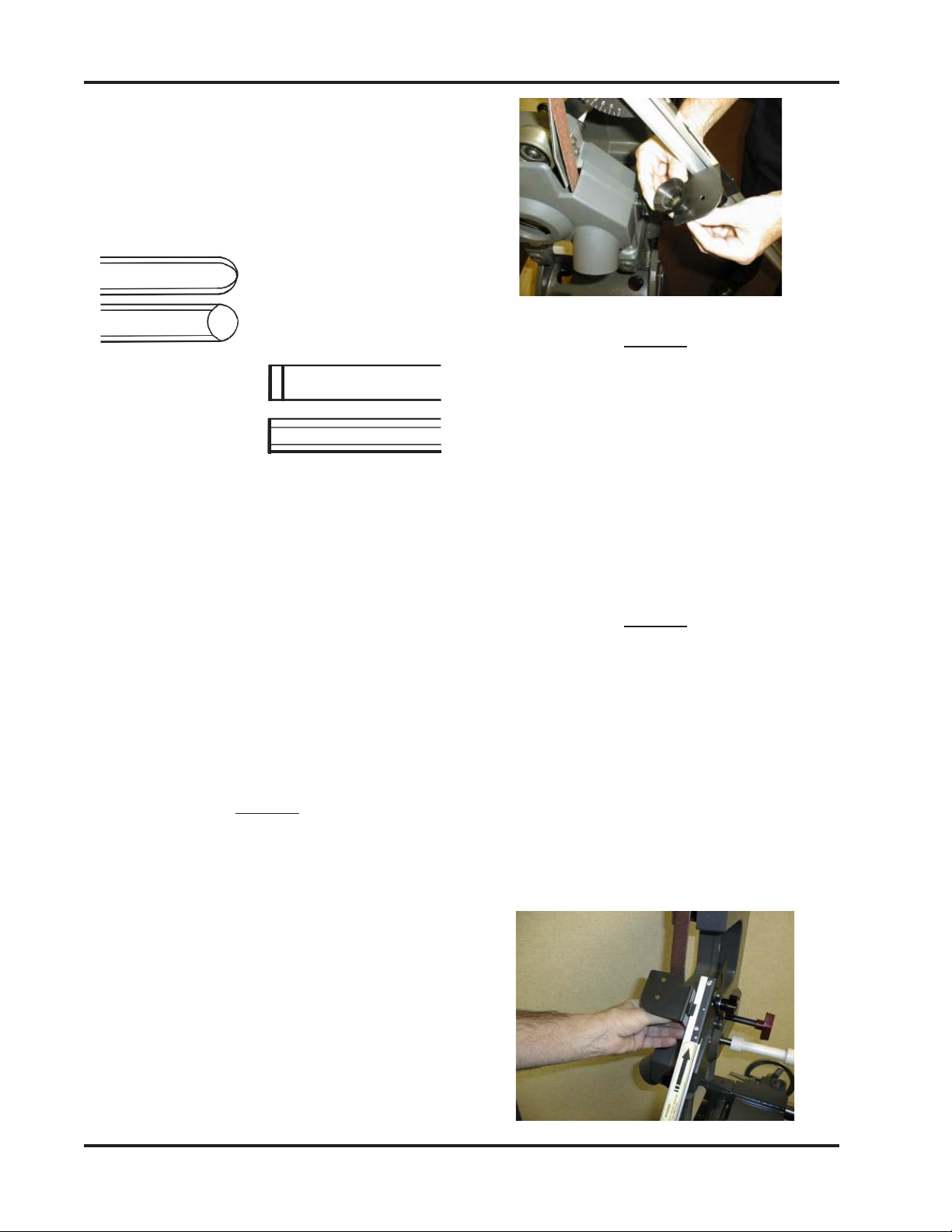
WARNING
Failure to mount Strip Sander (as described
in Step 1) will cause the abrasive belt to run
in the wrong direction, and will cause the
tool to gouge into the belt, damaging both
and throwing the tool.
2. Be sure that you have mounted the hub
with5/8" diameterholeandfour (4)spline
grooves on quill. Position the headstock
as far to the right as possible and lock.
3. Slide the coupler on the Strip Sander hub
and extend the quill until the quill hub
engages in coupler. Lock quill.
OPERATIONS
Basic Operations
CAUTION
Tooltemperatureisveryimportanttothelifeofyour
cutting tools. Cool the tool frequently in water dur-
ing the sharpening process.
1. The recommended speed is “I” (1750
RPM) on your Mark V Speed Dial.
2. In order to keep the hardness and tough-
ness properties of the steel in your cutting
tool, you must overheat the tool while
grinding, sharpening, or honing it. If you
can not touch the tool without burning
your finger, it is too hot. Cool the tool
frequently in water during the sharpen-
ing process.
NOTE
The finer the abrasive you use and/or the
more pressure you exert on the tool the more
heat will be generated. If your cutting tool
gets hot very quickly, you are either using
too much pressure or the belt has become
dull and needs replaced. Finer belts will
wear quickest and will need to be replaced
most often.
Grinding, Sharpening & Honing
1. Grinding - Use coarser grits 60, 80, 100 to
reshape the tools bevel or remove large
nicks in the cutting edge.
2. Sharpening - Use medium grits 100, 150,
220 to remove burrs, small nicks and
sharpen very dull tools.
3. Honing - Use finest grits 320, 400, 600 to
dress and improve the cutting edge of
tools that do not have any nicks or burrs
and only require a light touch-up to keep
them razor sharp.
Tool Care
Most new cutting tools will require at least
sharpening with medium grits and final hon-
ing with finest grit sanding belts. Lathe chis-
els intended for scraping only need grinding
with coarse grits. The burr left on the cutting
edge will help cut. Other lathe, carving, and
bench chisels must be used razor sharp and
are easiest to use when kept that way.
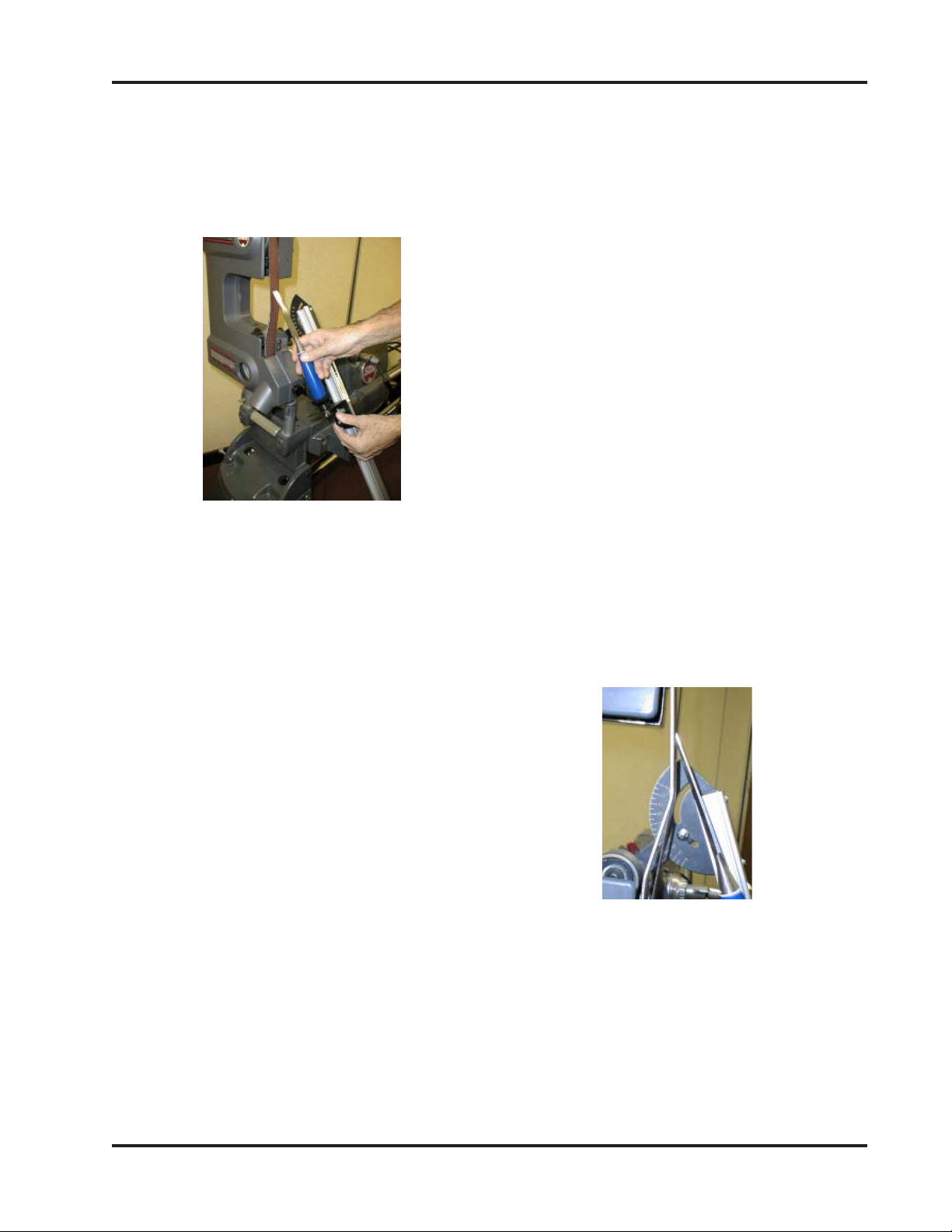
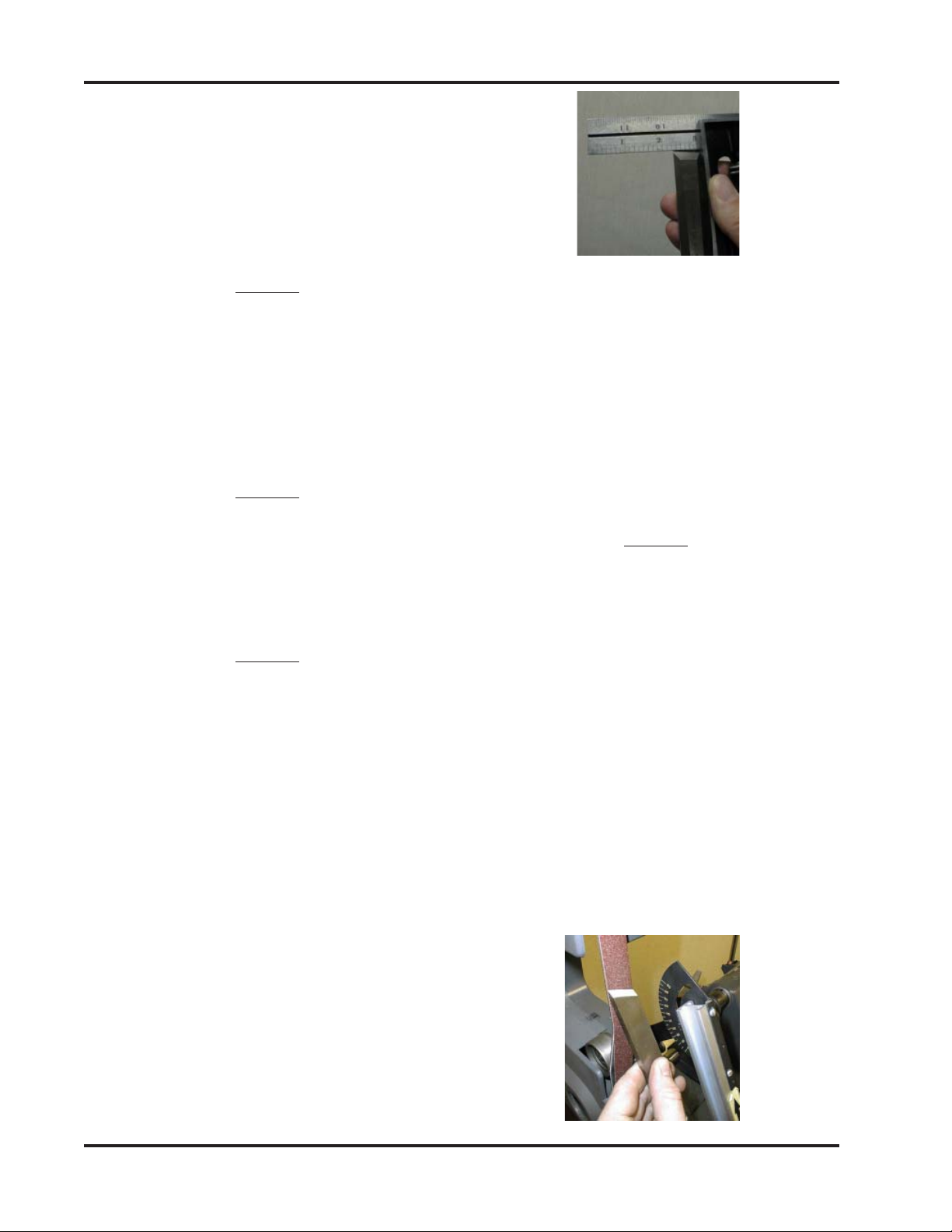
Setting the Tool Angle
The tool angle is a function of both the arm
angle and the cup position. The trunnion scale
is an approximate guide and is only accurate
when the metal shank of the tool being sharp-
ened is exactly parallel to the arm.
NOTE
To set the proper angle, you must first de-
cide whether you are going to copy the tool’s
bevel angle or change it.