Stahl ST Series Handbuch

ST Chain hoists_
Operating and Maintenance Instructions

BAST_02.FM
2
Fundamental information
You have purchased a product manufactured by STAHL CraneSystems GmbH.
This chain hoist has been constructed in compliance with the applicable standards
and regulations.
Inspect hoist for damage caused in transit immediately upon delivery.
Report damage caused in transit and after consulting the manufacturer/supplier
repair or have repaired before installation and commissioning.
Do not install or commission a damaged hoist!
- Assembly
- installation
- commissioning
-tests
- maintenance and elimination of faults
may only be carried out by a qualified person
Terms employed
User
Whoever uses and employs the chain hoist or has it operated by suitable trained per-
sonnel is considered to be the user (employer/company).
Trained personnel
Trained personnel are persons who have been instructed and trained in the duties
with which they are entrusted and the risks which may arise from incorrect
behaviour, have been advised on the necessary protective devices, precautions,
applicable regulations, accident prevention regulations and prevailing conditions
and have proven their ability.
Skilled electrician
A skilled electrician possesses knowledge and experience on electrical equipment
arising from specialist training and, with knowledge of the applicable standards and
regulations, is able to assess the work with which he is entrusted and detect and
avoid possible risks.
Definition of a qualified person:
A qualified person is one with the necessary qualification, based on theoretical and
practical knowledge of hoists, for the required activities as listed in the operating
instructions.
The person must be in a position to assess the safety of the installation in
conjunction with the application.
Persons with the authority to undertake certain maintenance work on our products
include service engineers of manufacturer and trained fitters with the corresponding
certification.
Seminars:
Comprehensive understanding of material handling products is a prerequisite for the
correct use of equipment. Competent and practically oriented, we impart the special-
ist knowledge required for the correct use, monitoring and care of your installation.
Ask for our seminar programme.
09.07

BAST_02.FM
3
Table of contents
1 Safety instructions 1.1 Symbols ..........................................................................................................................4
1.2 Operating instructions..................................................................................................4
1.3 Use for intended purpose............................................................................................5
1.4 Safety-conscious operation........................................................................................5
1.5 Organisational safety precautions.............................................................................6
1.6 Eletrical equipment.......................................................................................................6
1.7 Warranty.........................................................................................................................6
1.8 Periodic tests.................................................................................................................6
2 Getting to know the chain hoist ....................................................................................................................................................7
3 Installing 3.1 Installing stationary chain hoist .................................................................................8
3.2 Installing trolley.............................................................................................................8
3.3 Installing trolley on chain hoist ..................................................................................9
3.4 Connecting electric trolley........................................................................................11
3.5 Runway endstop .........................................................................................................11
3.7 Fitting the chain box ...................................................................................................11
3.8 Fitting the control pendant ........................................................................................12
3.9 Checking screw connections ...................................................................................12
3.10 Mains connection.......................................................................................................12
3.11 Dismantling ..................................................................................................................12
4 Commissioning 4.1 Checklist for commissioning .....................................................................................13
5 Operating 5.1 Duties of crane operator ...........................................................................................14
5.2 Operating control pendant........................................................................................15
5.3 Emergency stop ..........................................................................................................15
6 Maintenance 6.1 Maintenance work .....................................................................................................16
6.2 Maintenance intervals...............................................................................................16
6.3 Hook ..............................................................................................................................17
6.4 Load chain....................................................................................................................17
6.5 Checking function of slipping clutch .......................................................................18
6.6 Adjusting slipping clutch ...........................................................................................18
6.7 Hoist motor brake .......................................................................................................20
6.8 Oil change ....................................................................................................................20
6.9 Travel motor brake......................................................................................................21
6.10 Oil change ....................................................................................................................21
6.11 General overhaul ........................................................................................................21
6.12 Trolley............................................................................................................................21
6.13 Operating hours counter (optional) .........................................................................21
7 Repairs 7.1 Chain drive ...................................................................................................................22
8 Wearing parts 8.1 Hoist ..............................................................................................................................24
8.2 Trolley............................................................................................................................24
9 Technical data 9.1 Classification in acc. with FEM ................................................................................25
9.2 Ambient conditions.....................................................................................................25
9.3 Hoist motor data..........................................................................................................26
9.4 Travel motor data ........................................................................................................27
9.5 Specifications for mains connection.......................................................................28
9.6 Lubricants.....................................................................................................................30
9.7 Sound level...................................................................................................................31
9.8 Chain certificate..........................................................................................................31
Subject to alterations
09.07

BAST_02.FM
4
1 Safety instructions
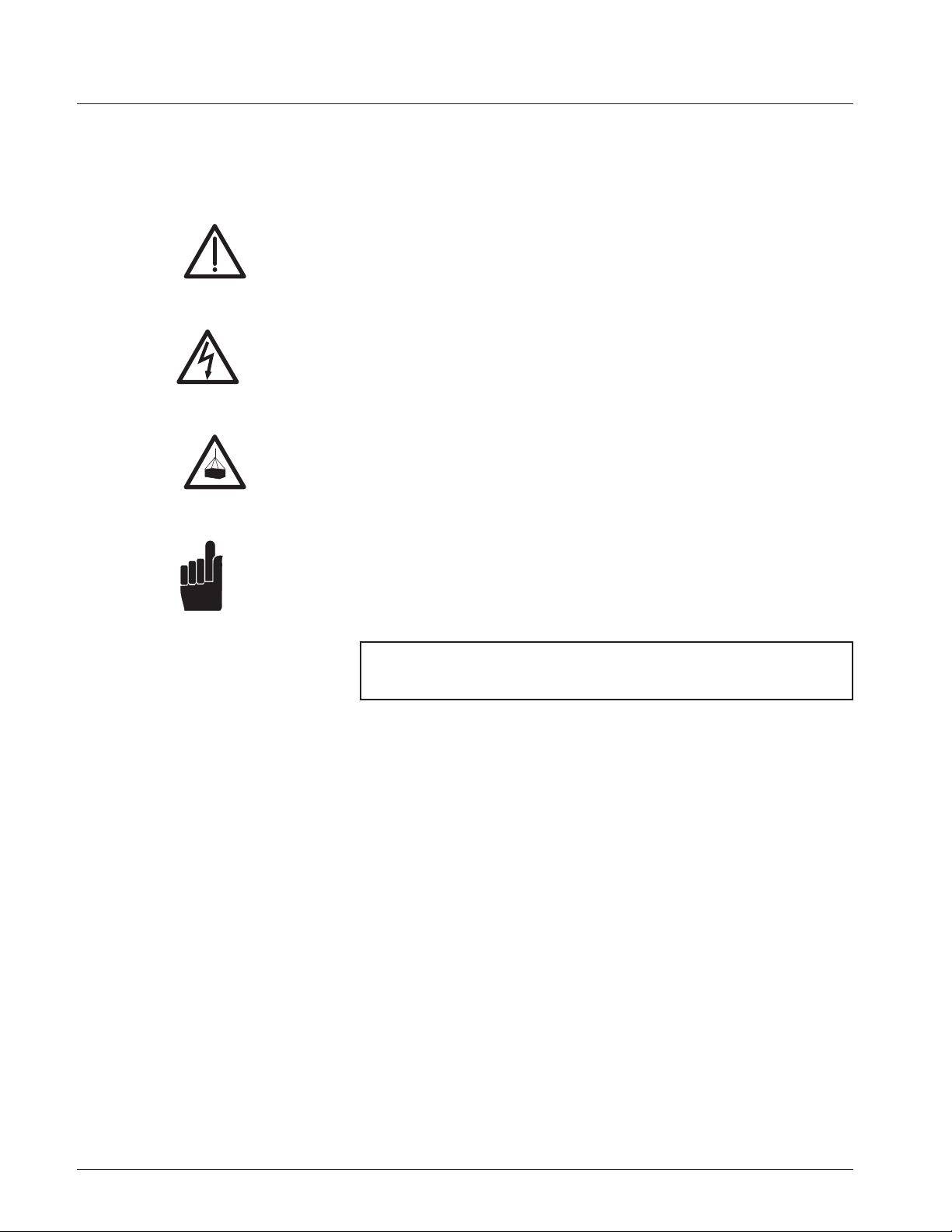
1.1 Symbols In these operating instructions, the following symbols indicate particularly important
information on risks and safety in operation.
Safety at work
This symbol marks all information on safety at work where risks to life and limb are
entailed.
Warning of electrical voltage
Covers such as hoods and caps which are marked with this symbol may only be
opened by "qualified persons or suitably instructed personnel".
Warning of suspended load
It is forbidden for persons to stand under suspended loads. This entails risks to life
and limb!
Safety in operation
Information marked with this symbol must be observed to avoid damage to the chain
hoist or the goods transported.
1.2 Operating instructions Read carefully and follow the operating instructions
In these operating instructions, these symbols mark particularly important infor-
mation on risks and safety in operation.
11.05

BAST_02.FM
5
1 Safety instructions
1.3 Use for intended purpose • Chain hoists are intended for lifting freely movable and guided loads that cannot
tilt. Depending on their design, they are for stationary or mobile use. If loads are to
be towed horizontally, or in the case of guided loads, automatic operation,
continuous deadweight or constantly repeated hoisting motions, the individual
application must be assessed. Contact the manufacturer in case of doubt.
• If the hoist forms "part of a machine," the person placing it on the market must
ensure that the hoist meets the specific regulations of the application.
• Runways, suspensions and endstops must be of suitable dimensions.
• Do not carry out any alterations or modifications. Additional fitments must be
authorised by the manufacturer. The declaration of conformity may be invalidated.
• Load chain hoist only up to the permissible safe working load, following the data on
the rating plate. (Caution: danger of load falling)
Not permitted are for example:
- Exceeding the safe working load
- Transporting persons
- Pulling loads at an angle
- Pulling loads loose, dragging or towing loads
- Manipulating the slipping clutch
- Operating the hoist with slack chain
- Touching the chain during the hoisting motion
- Operating a damaged hoist
- Operating the hoist with the chain twisted
- Approaching the emergency limit switch in normal operation
- Operating the chain hoist without a phase monitoring relay if the control pro-vided
by the customer is not installed in the terminal box on the chain hoist, but for
example in a stationary control cabinet.
1.4 Safety-conscious operation The ST chain hoists are constructed according to the state of the art and equipped
with a slipping clutch as overload protection. In spite of this, dangers may arise from
incorrect use or use for an unintended purpose.
• The operator, see page 2, is responsible for ensuring that work is carried out with
safety in mind and avoiding risks. (EC directive 99/92/EC, Decree on Safety at Work)
• Read the operating instructions before starting to work with the chain hoist.
• Observe the "Duties of crane operator", see page14.
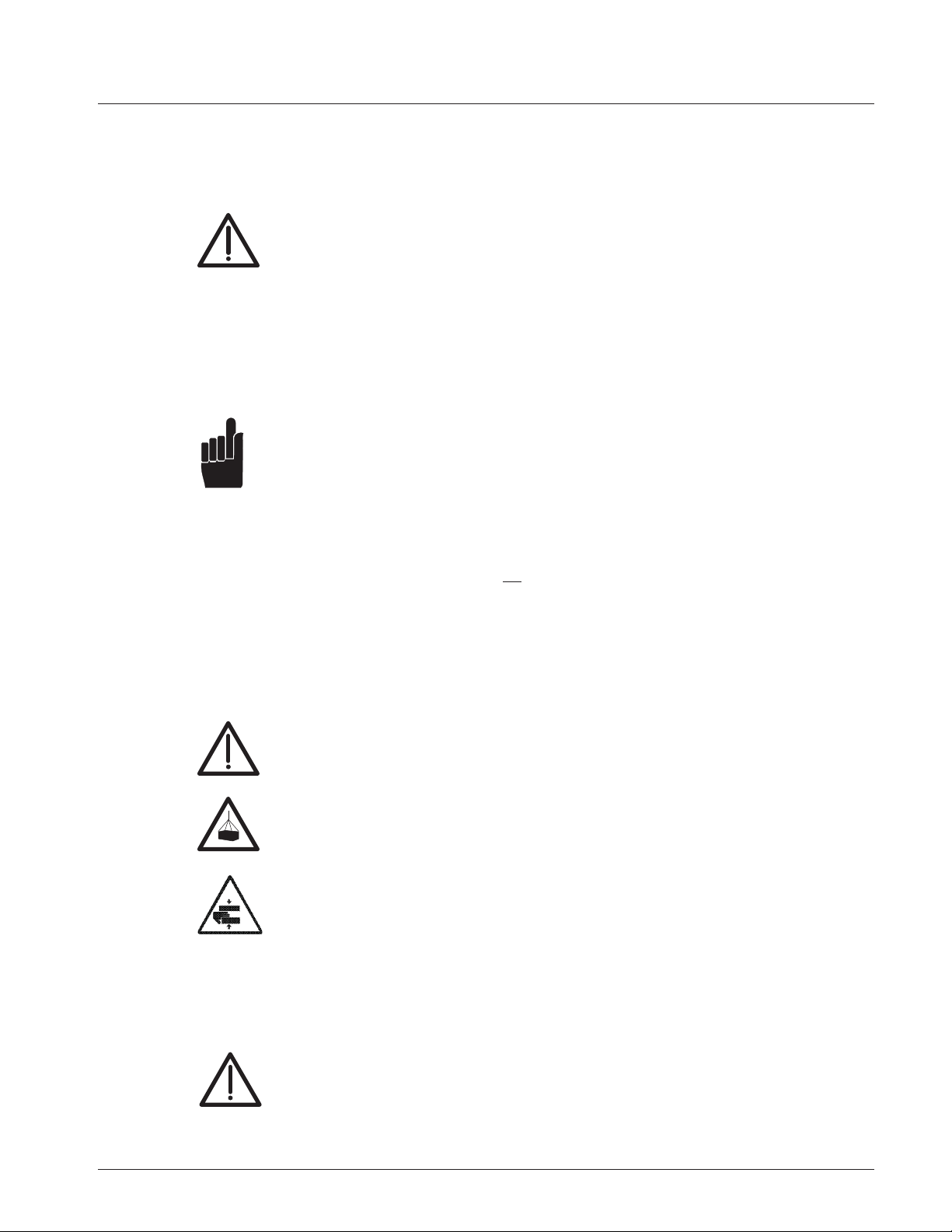
• Before starting work, find out where the EMERGENCY STOP button is (usually in
the control pendant).
•Do not place your hand between edges which may pinch or cut. Seesketch
• Do not use the emergency limit switch (ultimate limit switch for highest and lowest
hook position) as an operational limit switch.
• Report damage and defects to the chain hoist (abnormal noises, impaired braking
function, deformations, ...) to the person responsible immediately. Do not use the
chain hoist until the faults have been eliminated.
• Do not remove information plates from the chain hoist. Replace illegible or
damaged plates.
• Have hoist inspected by the relevant authority before commissioning.
1.5 Organisational safety precautions • Only direct persons to operate the hoist if they have been trained or instructed in
its use. Observe the legal minimum age!
• At regular intervals, check that work is being carried out in a safety-conscious
manner.
•
Observe the intervals specified for periodic tests. File the test reports in the test logbook.
• Store the operating instructions within easy reach where the chain hoist is
operated.
10.06

BAST_02.FM
6
1 Safety instructions
1.6 Electrical equipment Chain hoists, models ST05, ST10, ST20, ST30, ST32, ST50 and ST60, can be supplied
with various versions of electrical equipment.
The chain hoist functions with dangerous electrical voltages.
• Disconnect the chain hoist before opening covers marked with this symbol.
• The chain hoist may only be opened by qualified personnel (see page 2) or person-
nel having been instructed.
a) Direct control:
The motor of the chain hoist is switched on and off directly, i.e. without the use of
contactors. Mains voltage and mains current are present in the control pendant. Due
to the limited ampacity of the control pendants, direct control is only available up to
1.6 kW motor output at 400 V, 3 ph, 50 Hz. Direct control is not permissible in various
countries (e.g. Canada, U.S.A.) due to legal stipulations and standards.
b) Contactor control:
The motor of the chain hoist is switched by means of a contactor-transformer combi-
nation.
A safety extra-low voltage is present in the control pendant.
Contactor control is available for all motor sizes and outputs and is accepted world-
wide. The control voltage generated by the transformer is selected corresponding to
customer requirements and national standards. 48 V or 230 V control voltage is gene-
rally used in Europe, 120 V in North America.
c) Version without control:
STAHL chain hoists are available without control. The switchgear (e.g. contactors
and transformer) are then not supplied. The rectifier for activating the brake remains
part of the supply.
Safety note: if the hoist is supplied without control, it is recommended that the custo-
mer install a phase monitoring relay. If the control is not installed in the terminal box
on the chain hoist, but in a control cabinet for example, a phase monitoring relay is
obligatory.
If the control is supplied by others, or work carried out on the control, the braking
function must be tested.
1.7 Warranty • The warranty will become invalid if these operating instructions are not observed
for installation, operation, inspection and maintenance.
• Repairs and elimination of faults within the scope of the warranty may only be per-
formed by qualified personnel (see page 2) after the manufacturer/supplier has
been consulted and has given his approval.
The warranty will become invalid if the hoist is modified or original spare parts not
used.
1.8 Periodic tests Hoists and cranes must be inspected by a qualified person, see page 2, at least once
a year. The results of the test must be recorded and filed in the test log book.
The remaining service life of the hoist acc. to FEM 9.755 must also be established
during this inspection.
The periodic tests must be adapted to the hoist’s use. Intensive use entails shorter
maintenance intervals.
All tests must be initiated by the user, see page 2.
11.05

BAST_02.FM
7
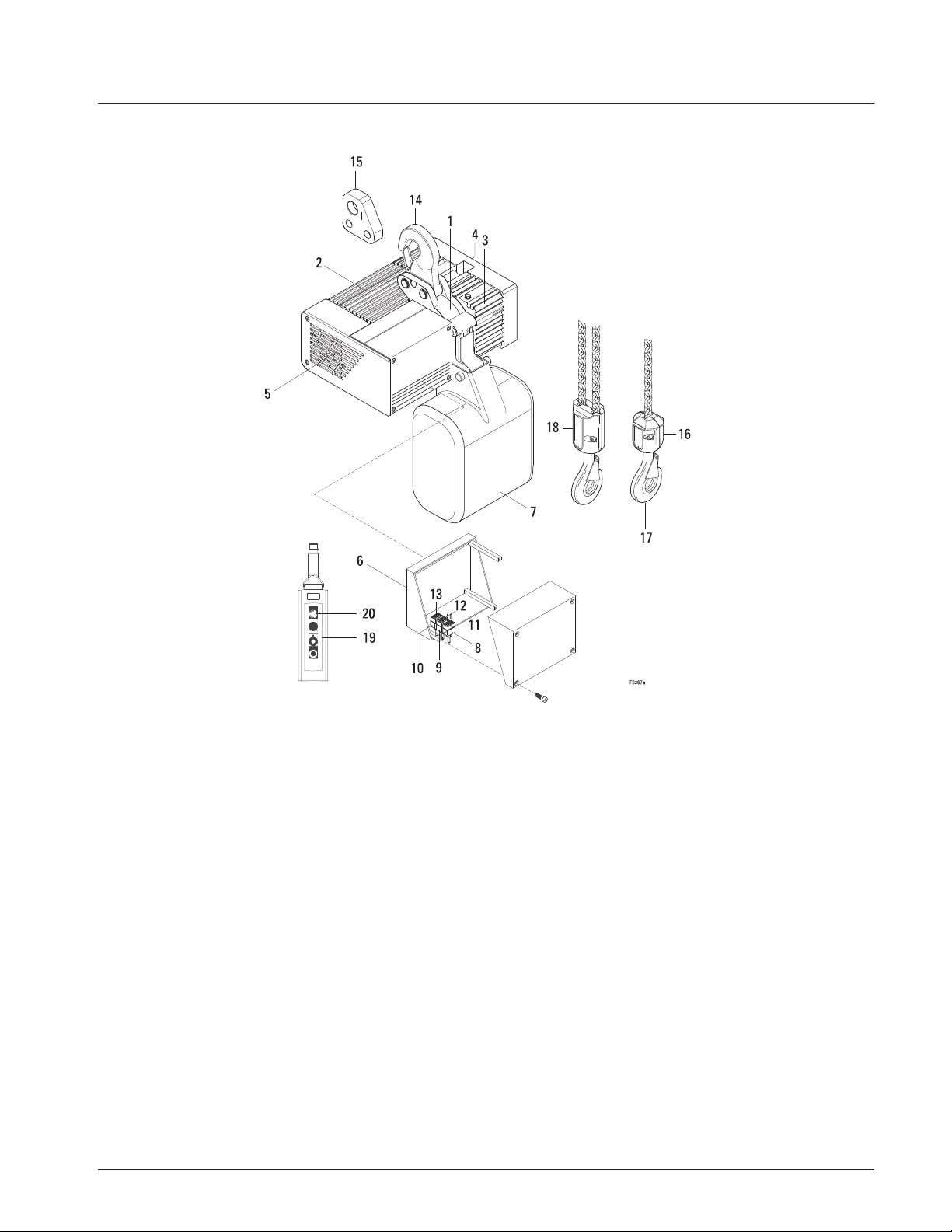
2 Getting to know the chain hoist
1 Chain drive
2 Motor
3 Gear
4 Slipping clutch
5 Brake
6 Panel box
7 Chain box
8 Plug for control pendant
9 Plug for travel drive
10 Plug for mains connection
11 Socket for control pendant
12 Socket for travel drive
13 Socket for mains connection
14 Suspension hook
15 Suspension eye
16 Bottom hook block, single fall
17 Load hook
18 Bottom hook block, 2-fall
19 Control pendant
20 Emergency off
Some illustrations include options
11.05

BAST_02.FM
8
3 Installation
3.1 Installing stationary chain hoist Note installation position of suspension eye or suspension hook nsketch!
(Tightening torque ST05 see page12)
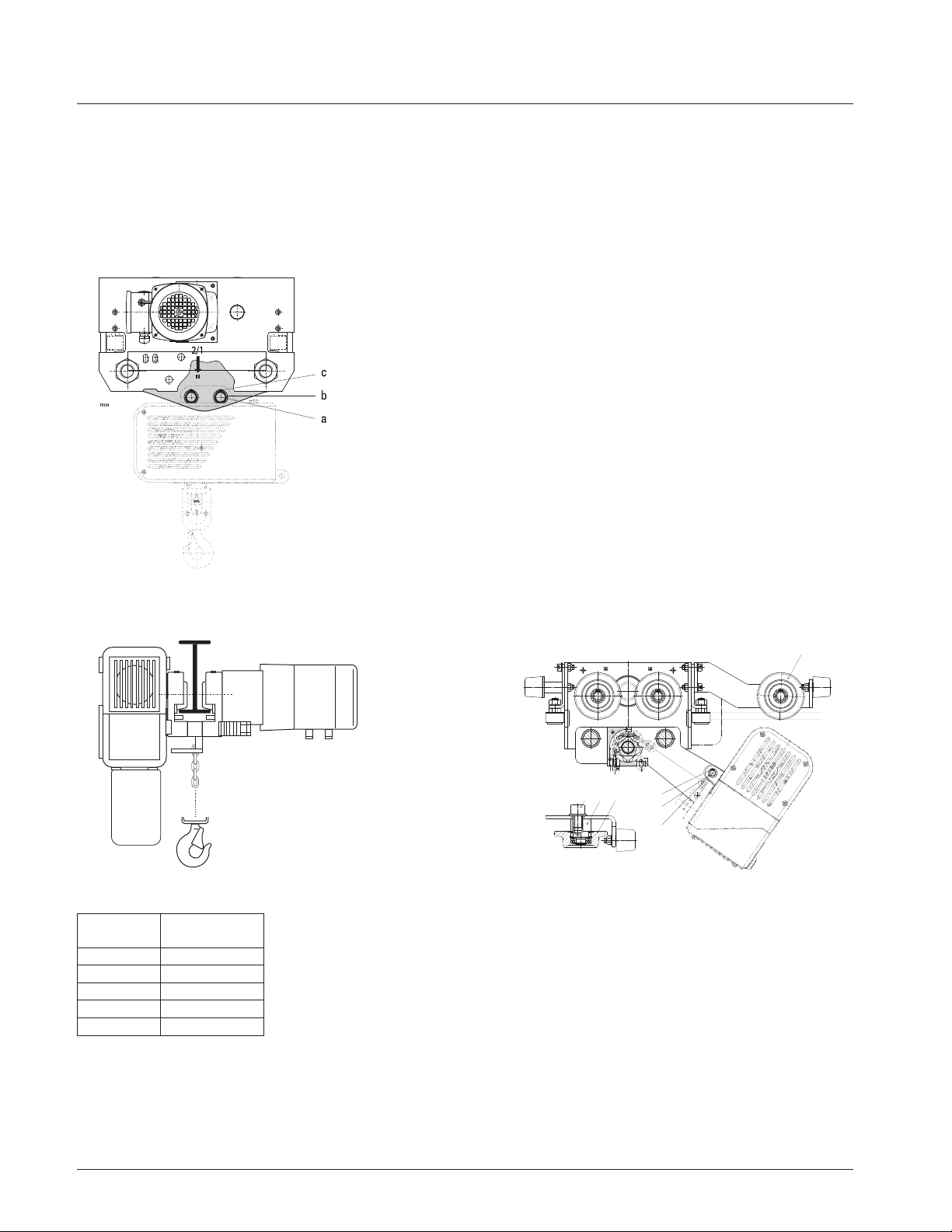
3.2 Installing trolley 3.2.1 Adjusting trolley to runway flange
1. Adjust play of wheel flanges, see sketch and table
2. Tighten nut with specified torque, see page12
3. Fit screw retentions.
Suspend the chain hoist in the centre of the trolley.
Grease wheel gearing.
Use only original spare parts for modifying the flange width.
ST05 ST10 - ST60
11.05

BAST_02.FM
9
3 Installation
3.3 Installing trolley on chain hoist 1. US-G 10 with ST05
Always suspend chain hoist from centre of trolley. Seesketch, page 8
US-G 10 with ST10
Fit suspension piece with suspension bolt (a) to chain hoist. Note installation
position of suspension piece. Lock bolt (a) with washer (b) and cheese-head
screw (c). Seesketch
KFN 10/32 with ST10/ST20-ST32; ST50 /ST60 1/1
Fit suspension piece with suspension bolt (a) to chain hoist. Note installation
position of suspension piece. Lock bolt (a) with locking plate (b) and cheese-head
screw (c). Seesketch
2. Slide trolley onto runway or push on from below after swivelling the side cheeks
up.
3. Check that screws and nuts are tightened with specified torque, see page12.
4. The screw retentions must be fitted!
US-G10 with ST05 1/1 ... 2/1 US-G10 with ST10 1/1
KFN10/32 1/1 KFN10/32 2/1
10.06

BAST_02.FM
10
3 Installation
3.3 Installing trolley on chain hoist
(continued)
1. KFN 63
Fit suspension piece with suspension bolt (a) to chain hoist. Observe installation
position of suspension piece for 1/1 and 2/1 reeving! Lock bolt (a) with washer (b)
and circlip (c). See sketch
2. Slide trolley onto runway or push on from below after swivelling the side cheeks
up.
3. Check that screws and nuts are tightened with specified torque, see page12.
4. The screw retentions must be fitted!
KFK ..
5. Turn wheel (d) by means of cam (e) until it is in contact with the running surface of
the runway.
Tighten screw (f).
N.B.: The guide roller must be flush with the wheels.
a
b
c
fe
d
d
W0761
KFN 63 2/1
KFK ..
KE-T 22
Wheel Max. S.W.L.
[kg]
50 500
63 500 (KE-T)
63 1000
80 3200
125 6300
11.05
Andere Handbücher für ST Series
1
Dieses Handbuch passt für folgende Modelle
30
Inhaltsverzeichnis
Andere Stahl Kettenzug Handbücher
Beliebte Kettenzug Handbücher anderer Marken

EINHELL
EINHELL Herkules H-F 1000 Bedienungsanleitung

RED ROOSTER
RED ROOSTER TCR-250 Bedienungsanleitung

POWERTEX
POWERTEX PCB-S1 Bedienungsanleitung

Parkside
Parkside PSZ 250 A1 Bedienungsanleitung

Ingersoll-Rand
Ingersoll-Rand QCH Series Bedienungsanleitung

Creative Conners
Creative Conners CM Varistar Smart Chain Hoist Bedienungsanleitung