All DYNATRAIL direct ignition furnaces must have a flame sensing circuit through the
control module that senses the presence of main burner flame. If proper flame sensing is
not obtained or if the burner fails to light, the furnace must go into 100% lockout. When
lockout occurs, the valve closes and will remain closed until the thermostat circuit is
broken. Re-ignition will not occur automatically. If it could, it would not be 100% lockout.
While 100% lockout is a safety factor, it can prove to be frustrating for the RV owner who
has experienced lockout problems. Not only can a lockout problem be difficult at times to
diagnose, it will result in continuous operation of the furnace blower (that is, until the
thermostat circuit is broken) and can drain the battery if the owner is not in the
recreational vehicle.
The solution for this complaint is not to try and eliminate the lockout function of the
furnace, but rather to find the cause for lockout (which will be covered later), and correct it.
The motor circuit contains a time delay relay (see wiring diagram). The purpose of a time
delay relay is to provide a means of the blower operation on initial startup and after the
thermostat is satisfied. When the thermostat contacts open, the circuit through the coil of
the time delay relay is broken and the contacts open after approximately 3-5 minutes,
depending on the furnace model.
MAINTENANCE
Preventative maintenance is essential if an RV owner is to have reliable, safe operation of
his furnace. By far, the two most important areas to watch closely in order to assure safe,
reliable operation, are the venting and the main burner.
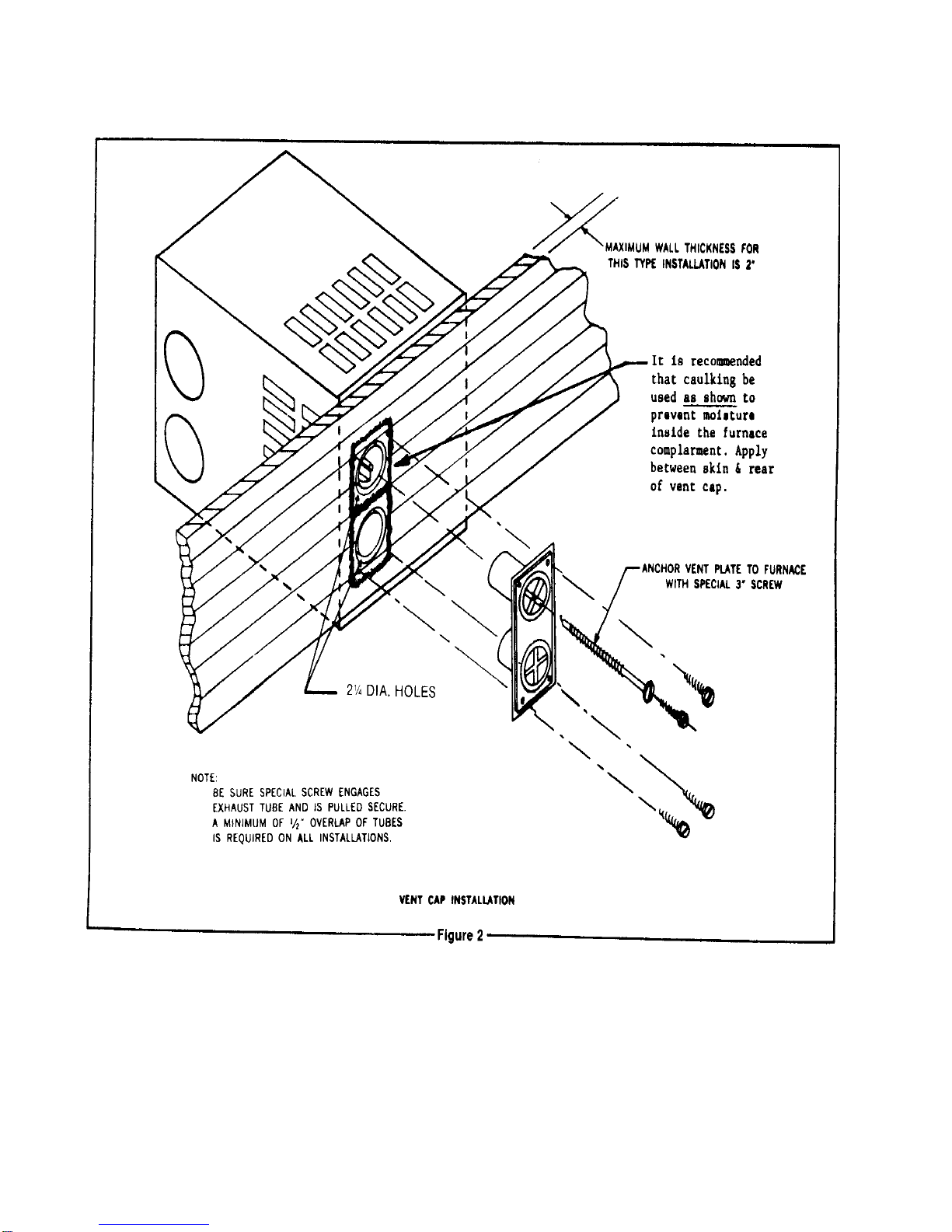
An obstruction in the vent or main burner will reduce the intake of combustion air that
results in incomplete combustion. Whenever incomplete combustion occurs, the
by-products are carbon monoxide (CO) and soot. If the furnace outside exhaust vent shows
black soot may be forming, the furnace should not be operated until the problem is
corrected. Possible causes are air restriction combustion air, low gas pressure, dirty
burner, slow motor, low voltage, etc.
If operation of the furnace continues under these conditions, it could result in serious
injury to the occupants of the RV or even death.
Cleaning of the main burner and an inspection of the venting system should be done at
least once a year, preferably just before the beginning of the heating season. Some RV
owners and service personnel have the false assumption that if a furnace has not been
used, it will not require cleaning. NOT SO! A furnace that has not been used for some time
could be more in need of cleaning than a furnace that has been used extensively.
Dust and lint should be removed from the room air blower wheel and sail switch. A buildup
of dust and lint on the blower wheel can cause the motor to drag and not generate enough
airflow to engage the sail switch. Dust accumulation on the sail switch will restrict the
travel of the actuator arm to where the airflow across the paddle will not sail it in and
complete the valve circuit.