
P1PE P4100P Bedienungsanleitung

Page | 1
P1PE - PETROL LAWN MOWER
Models P4100P, P4600SP, P5100SPE
Owners Manual
P1PE - Position One Power Equipment
Issac Way, Pembroke Dock, Pembrokeshire, SA72 4RW
www.p1pe.co.uk

Page | 2
IMPORTANT: PLEASE READ THE ENGINE MANUAL
BEFORE FIRST USE OF YOUR LAWN MOWER
CONTENTS:
INTRODUCTION: 3
SAFETY INFORMATION: 4
KNOW YOUR LAWNMOWER: 9
GRASS CATCHER/DEFLECTOR ASSEMBLY: 10
HANDLE ASSEMBLY: 10
ADJUSTMENT OF CUTTING HEIGHT: 11
PRECAUTIONS: 12
OPERATION: 12
4 IN 1 FEATURE: 15
GEAR BOX MAINTENANCE: 17
STORAGE 19
MAINTENANCE: 20
TROUBLESHOOTING: 22
DECLARATIONS OF CONFORMITY: 24
PRODUCT RECYCLING: 25
WARRANTY: 26
SPECIFICATIONS: 27

Page | 3
INTRODUCTION:
Thank you for purchasing a P1PE Lawnmower. This Lawnmower will give you many years of safe and
reliable service if operated in accordance with these instructions. Please read and understand this
owner’s manual before using your lawnmower, failure to do so could result in personal injury or
damage to the lawnmower.
NEVER TIP THE LAWNMOWER FORWARDS OR ON TO ITS SIDE, THIS WILL FLOOD THE CYLINDER
AND AIR FILTER WITH OIL. To access the underside, lift the front wheels by lowering the handle
until it rests on the ground. Only do this when the engine is stopped.
www.p1pe.co.uk

Page | 4
SAFETY INFORMATION:
The operator of the machine is responsible for, and has a duty of care in making sure that the
machine is operated safely and in accordance with the instructions in this user manual.
Keep the manual safe and pass it on if the machine is loaned or sold to another user.
Please note the following safety points.
A) The machine should never be left it in a condition which would allow an untrained or
unauthorised person/s to operate this machine.
B) All due care and diligence should be taken by the operator for the safety of, and with regard
to, those around whilst using the machine.
C) Some or all of the following - warning signs, symbols and/or PPE pictograms may appear
throughout this manual. You MUST adhere to their warning/s. Failure to do so may result in
personal injury to yourself or those around you.
Indicates a hazard, which, if not avoided, could result in serious injury or death.
Indicates a hazard, which, if not avoided, could result in serious injury.
Indicates a hazard which, if not avoided, might result in minor or moderate injury.
Indicates a situation that could easily result in equipment damage.
READ and keep the manual safe and pass it on if the machine is loaned or sold to another user. You
MUST fully read instructions to make sure you use and operate machine safely.
Appropriate Personal Protective Equipment (PPE), MUST be worn at all times when machine is in use
or being repaired.

Page | 5
Carbon Monoxide
Carbon monoxide is a colourless and odourless gas.
Inhaling this gas can cause death as well as serious
long term health problems such as brain damage.
The symptoms of carbon monoxide poisoning can
include but are not limited to the following;
Headaches, dizziness, nausea, breathlessness,
collapsing or loss of consciousness.
Carbon monoxide poisoning symptoms are similar to
flu, food poisoning, viral infections and simply
tiredness. It is quite common for people to mistake this very dangerous poisoning for something else.
To avoid carbon monoxide poisoning DO NOT use Petrol/Diesel- powered equipment inside any of the
following; Home, garage, tent, camper van, mobile home, caravan or boat.
This list is not exhaustive and if you are in any doubt contact your dealer.
If you think you have or someone around you has been affected by carbon monoxide poisoning;
Get them fresh air immediately, by leaving the affected area or by opening doors and windows. If safe
and practical to do so make sure that the machine is turned off. DO NOT enter a room you suspect of
having carbon monoxide present –instead call the emergency services.
Contact a doctor immediately or go to hospital - let them know that you suspect carbon monoxide
poisoning.
DO NOT use in an enclosed area or a moving vehicle.
General fuel safety (where applicable).
ALL FUELS ARE FLAMMABLE
Fire hazard - keep fuel away from all sources of ignition for example heaters, lamps, sparks from
grinding or welding.

Page | 6
DO NOT carry out hot work on tanks that have contained fuel it is extremely dangerous.
ALWAYS keep work area clean and tidy.
ALWAYS clean up all spills promptly using correct methods i.e. absorbent granules and a lidded bin.
ALWAYS dispose of waste fuels correctly.
Fuelling/De-fuelling (where applicable).
ALL FUELS ARE FLAMMABLE
ALWAYS fuel and defuel in a well-ventilated area outside of buildings.
ALWAYS wear correct, suitable and fit for purpose Personal Protective Equipment (PPE), suggested
items are but not limited to safety gloves and overalls.
When fuelling/de-fuelling ALWAYS avoid inhaling fumes
When de-fuelling ALWAYS use a propriety fuel retriever.
ALWAYS carry fuel in the correct and clearly marked container.
Electrical safety (where applicable).
Electricity can kill - NEVER work on LIVE/ENERGISED equipment.
Prior to carrying out any maintenance work you MUST Identify electrical isolation methods and isolate
all electrical supplies,
Prior to use and with all electrical supplies isolated You MUST check all electrical cables, plugs and
connections for the following;
Are intact and have no signs of damage, to include but not limited to bare wires, chaffing, cuts and
loose wiring.

Page | 7
If there are any signs of damage, the damaged item MUST be taken out of service until the damage
has been repaired by an electrically competent person.
All trailing cables should be routed so as not to cause any kind of trip hazard.
NEVER work on or near electricity with wet hands, wet clothing, and wet gloves.
Batteries (where present).
Batteries present a risk if they become damaged by the possible leaking of electrolyte. This electrolyte
is an acid and can cause serious burn injuries. Care should be taken when working on or near them.
NOTE the electrolyte may be in liquid or gel form.
Should you come into contact with electrolyte you should;
Remove all clothing contaminated with electrolyte. If you cannot remove then saturate in water.
Get medical assistance as soon as possible. You must advise the medical staff of the type acid.
Lead/acid battery = dilute sulphuric acid
Nickel/cadmium = potassium hydroxide alkali electrolyte.
Use fresh running water to wash off excess electrolyte, continue this until medical assistance arrives.
Make sure that you do not wash the electrolyte to another part of the face or body.
If electrolyte comes into contact with Eyes the electrolyte needs to be immediately washed away with
large amounts of water. Make sure that you do not wash the electrolyte to another part of the face or
body.
Gasses from charging batteries are highly flammable and great care should be taken to charge in well
ventilated areas.
There is an explosion risk if the battery terminals are short circuited, when connecting/dis-connecting
ALWAYS exercise great care so that the terminals or battery leads are NOT allowed to touch and cause
a spark. ALWAYS use suitable insulated tools.

Page | 8
Vibrations (where applicable).
Prolonged use of hand held (operated) machines will cause the user to feel the effects of/from
vibrations. These vibrations can lead to white finger (Raynaud's phenomenon) or carpal tunnel
syndrome. This condition reduces the ability of the hand to feel and regulate temperature, causing
numbness and heat sensations and may cause nerve damage and circulatory tissue death.
Not all factors that lead to white finger disease are known, but cold weather, smoking and other
diseases that affect blood vessels and blood circulation as well as large and long-lasting impact of
shocks are considered factors in the formation of white finger. Note the following to reduce the risk
the white finger and carpal tunnel syndrome:
Wear gloves and keep your hands warm
Take regular breaks
All of the above precautions may help reduce the risk of white finger disease but not rule out carpal
tunnel syndrome. Long-term and regular users are therefore recommended to observe the condition
of your hands and fingers. Seek medical attention immediately if any of the above symptoms should
occur.
Noise (where applicable).
The operating noise of the machine can damage your hearing. Wear hearing protection such as
earplugs or ear defenders to protect your hearing. Long- term and regular users are advised to have
hearing checked regularly. Be especially vigilant and cautious when wearing hearing protection
because your ability to hear alarm warnings will be reduced.
Noise emissions for this equipment is unavoidable. Carry out noisy work at approved times and for
certain periods. Limit the working time to a minimum. For your personal protection and protection of
people working nearby it is also advisable for them to wear hearing protection.
See CERTIFICATE of CONFORMITY section for outdoor noise declaration of conformity.

Page | 9
KNOW YOUR LAWN MOWER:
1) Upper Handle
2) Lower Handle
3) Engine Control Bar
4) Throttle Control
5) Engine
6) Deck
7) Self-propelled Drive Control Bar (Only Available On P4600SP & P5100SPE)
Page | 10
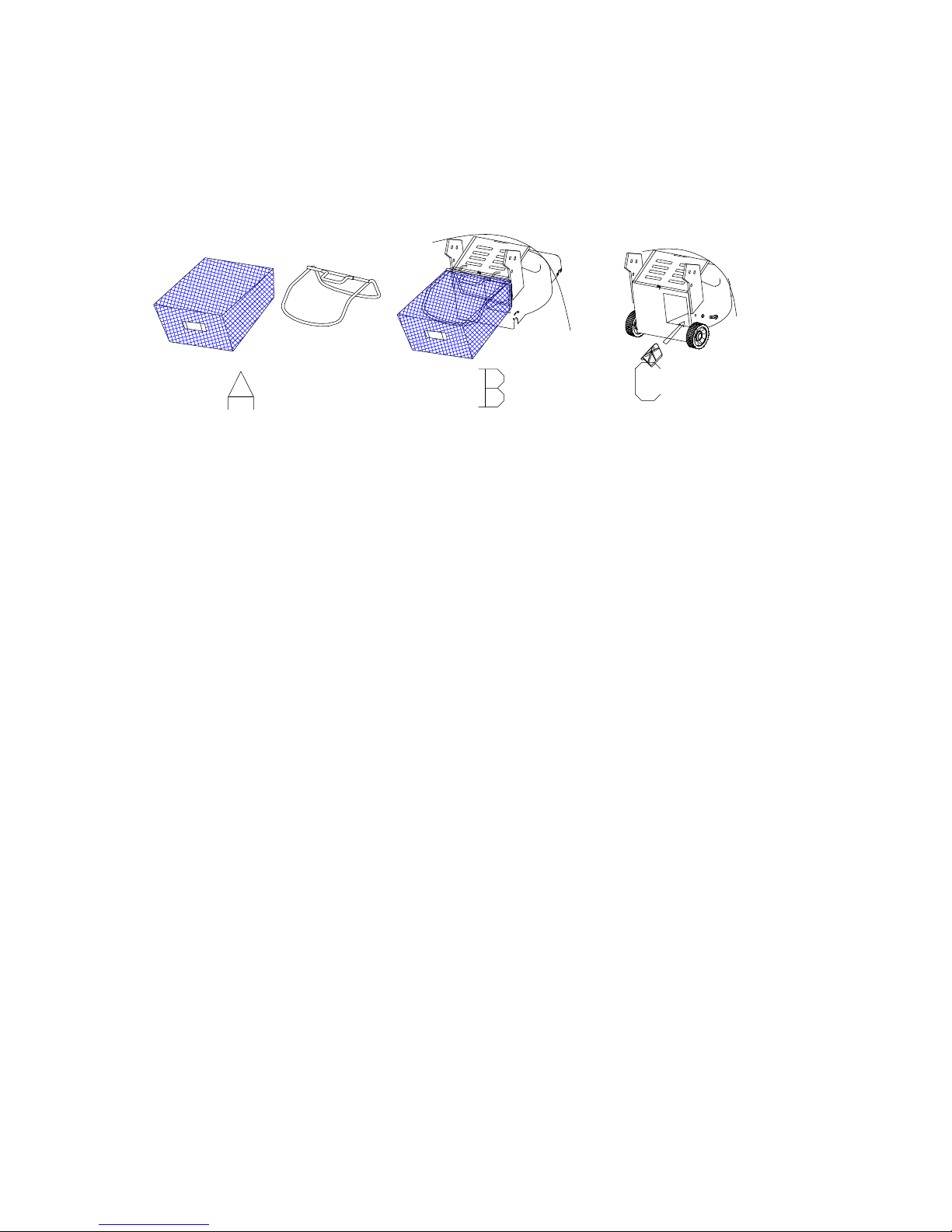
ASSEMBLY OF GRASS CATCHER:
A) Insert the grass catcher frame inside the grass catcher bag.
B) Hitch the grass catcher bag onto the rear of the lawnmower.
C) Pull up the deflector and place the grass catcher bag into place.
ASSEMBLY OF THE HANDLE:
A) Attach the lower handle to the handle brackets and the upper handle to the lower handle,
making sure that all cables run smoothly and do not snag when the handles are folded.
B) Attach the recoil start cord bracket onto the right hand side of the upper handle.
C) Secure the cables with the plastic collars.
D) Slip the recoil cord through the recoil cord bracket on upper right handle.
Andere Handbücher für P4100P
1
Dieses Handbuch passt für folgende Modelle
2
Inhaltsverzeichnis
Andere P1PE Rasenmäher Handbücher

Beliebte Rasenmäher Handbücher anderer Marken


TALEN TOOLS
TALEN TOOLS AVR HGM30 Bedienungsanleitung

DEWEZE
DEWEZE ATM-725 Bedienungsanleitung

Weed Eater
Weed Eater 180083 Bedienungsanleitung

Husqvarna
Husqvarna Poulan Pro PP185A42 Bedienungsanleitung

Better Outdoor Products
Better Outdoor Products Quick Series Bedienungsanleitung

Cub Cadet
Cub Cadet 23HP Z-Force 60 Betriebsanleitung


