
SmartCockpit Dash8-200 Bedienungsanleitung
FLIGHT CONTROLS
CONTROLS AND INDICATORS
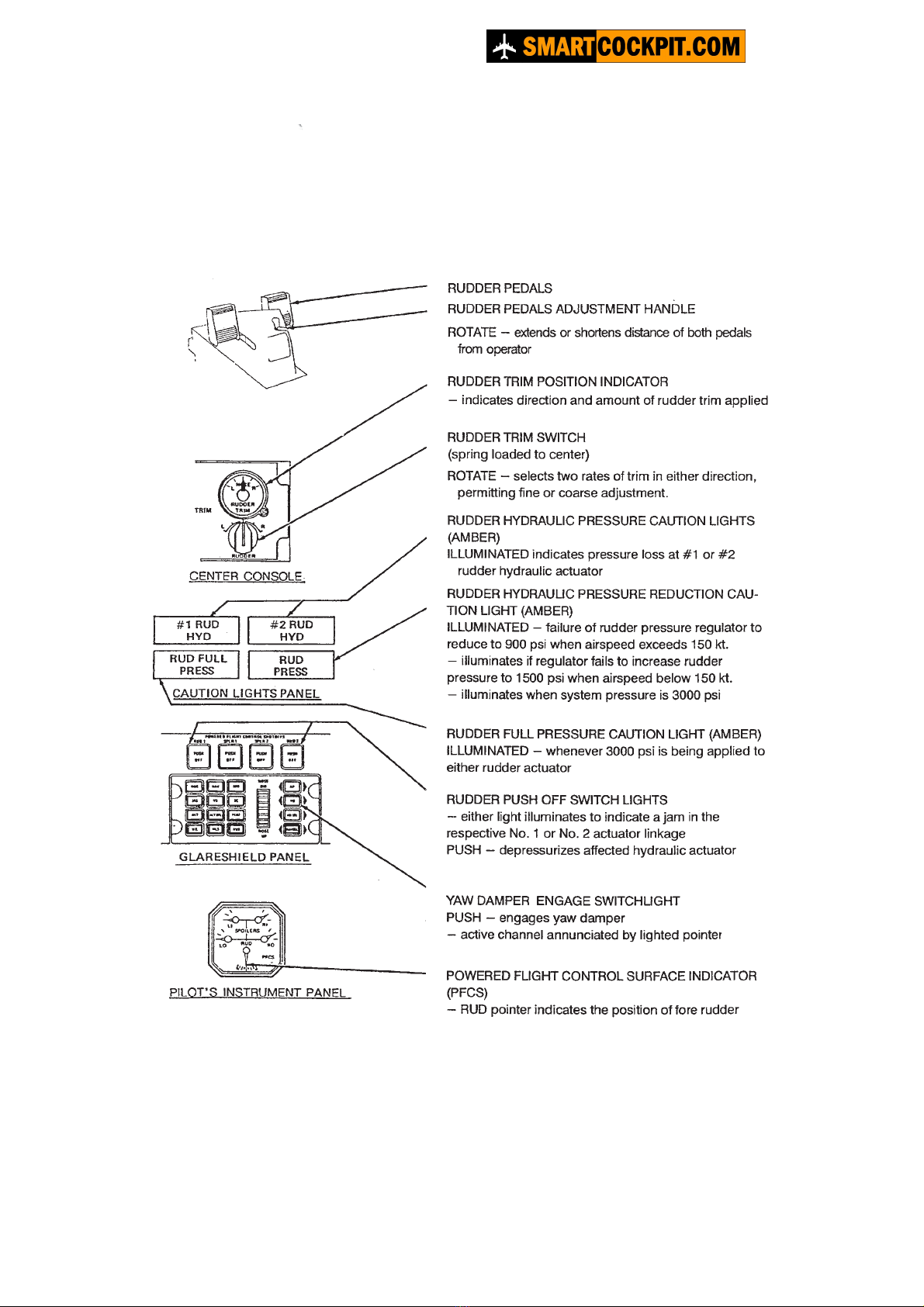
Rudder and yaw damper
Dash8-200/300 - Flight Controls
Page 1
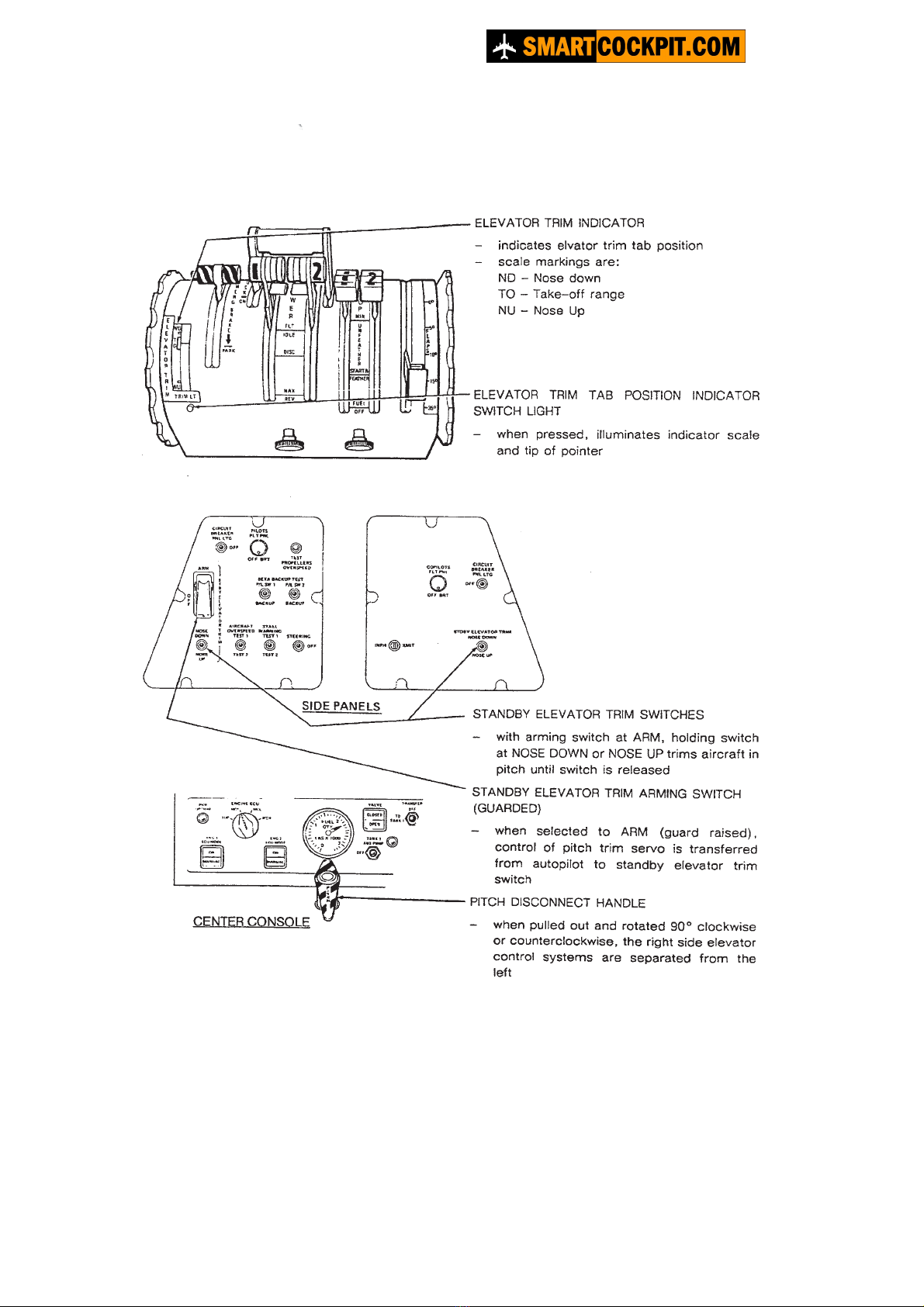
Elevators
Dash8-200/300 - Flight Controls
Page 2
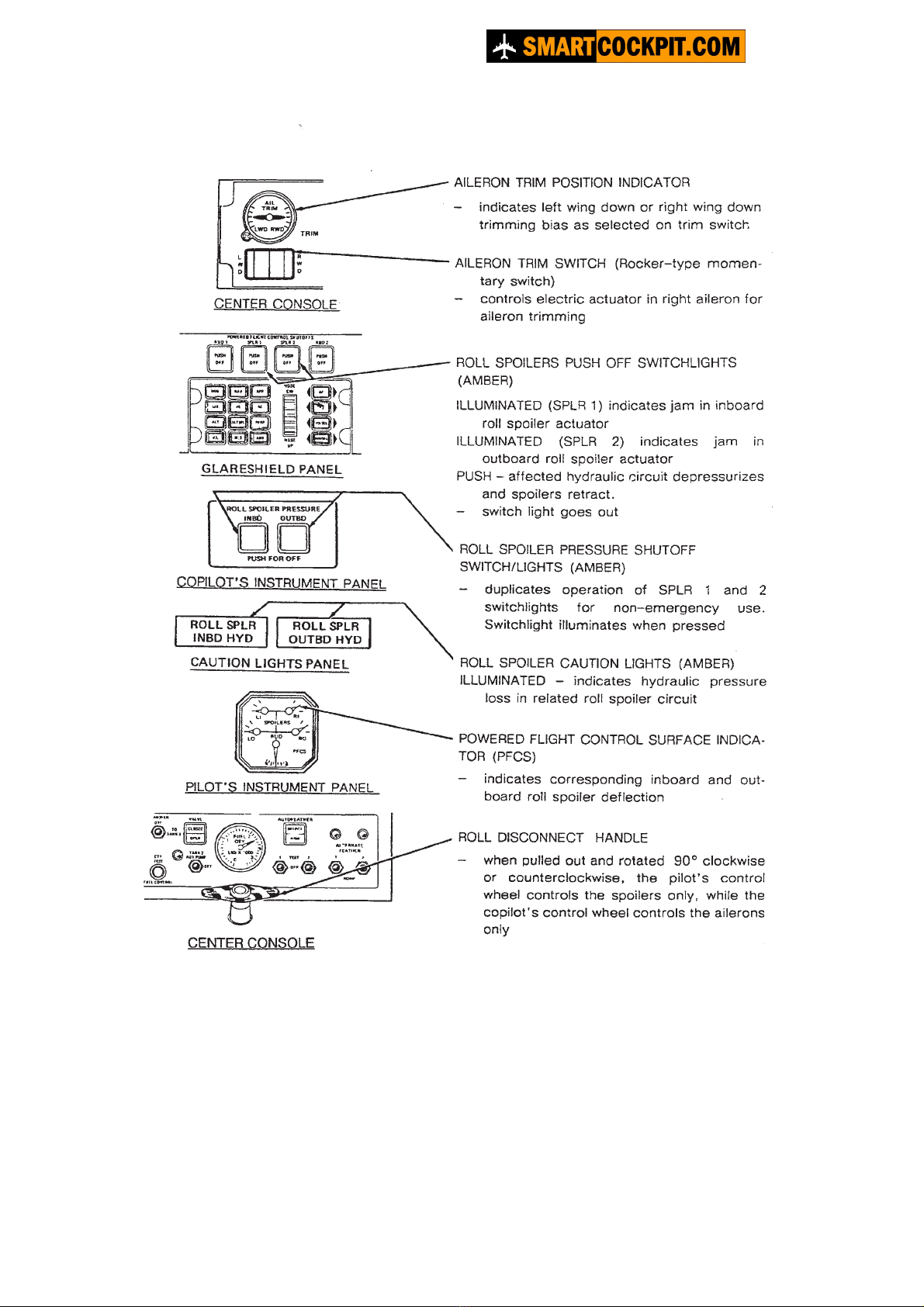
Spoiler and aileron
Dash8-200/300 - Flight Controls
Page 3
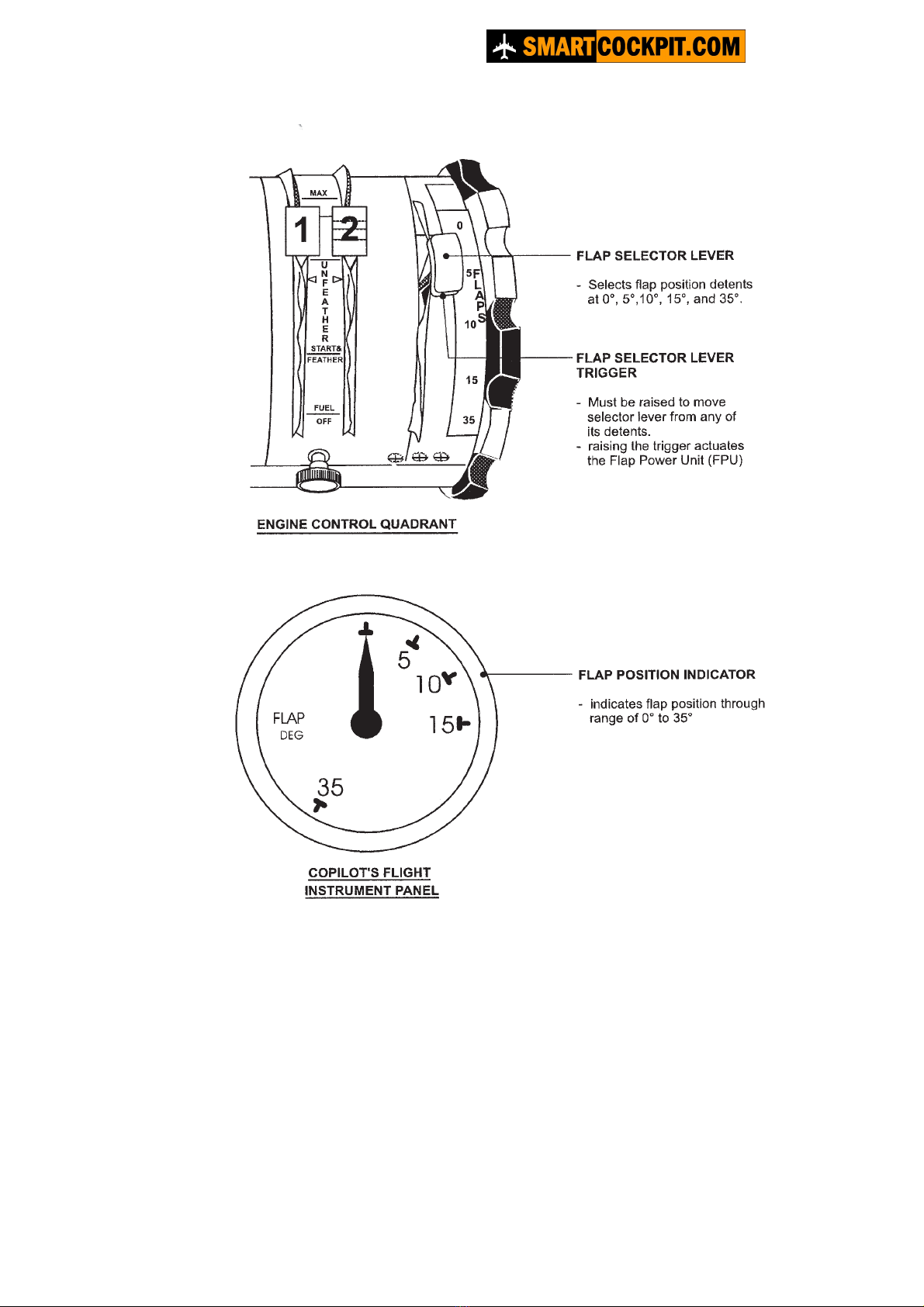
Flaps
Dash8-200/300 - Flight Controls
Page 4
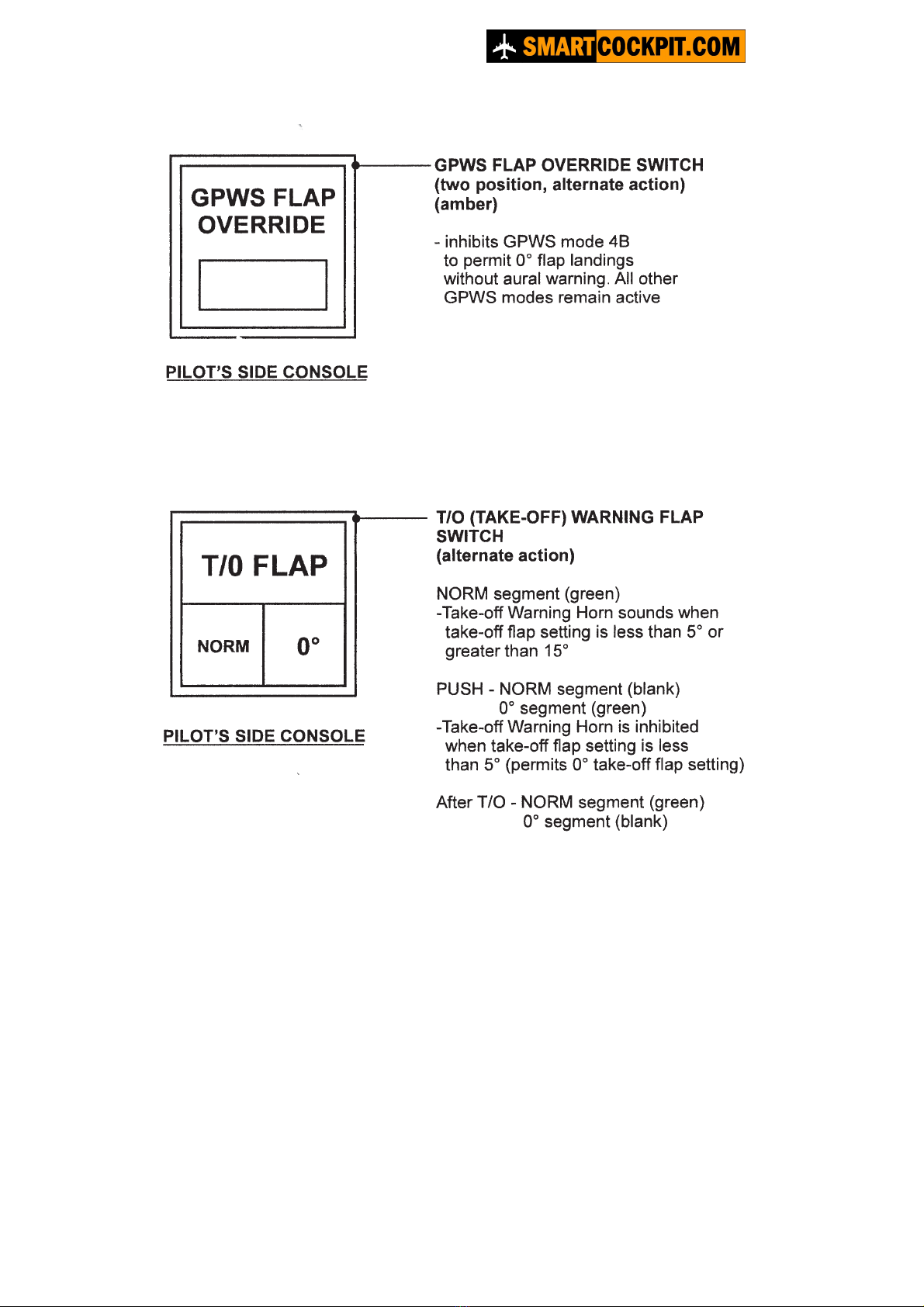
Flaps
Dash8-200/300 - Flight Controls
Page 5
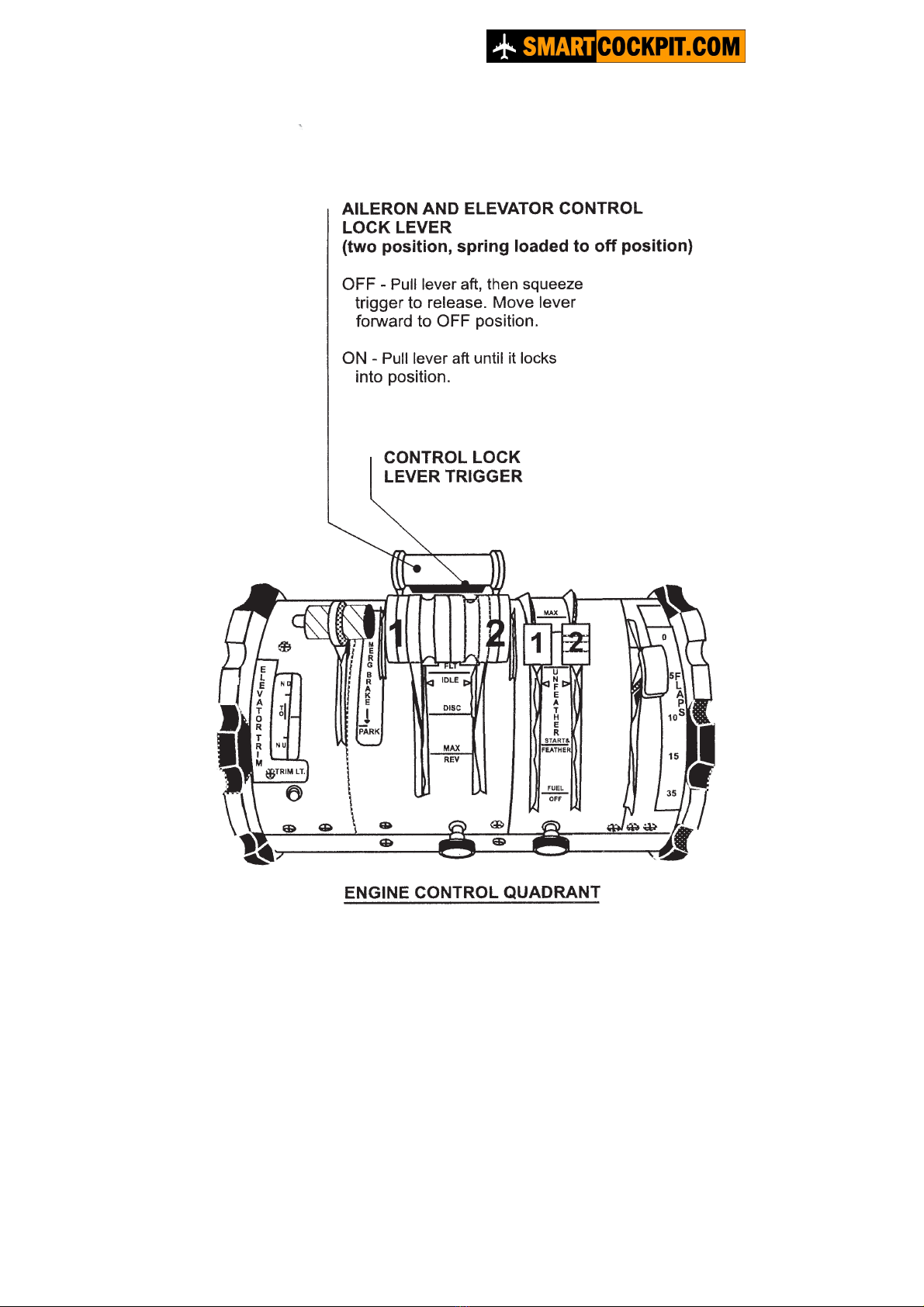
Miscellaneous controls
Dash8-200/300 - Flight Controls
Page 6
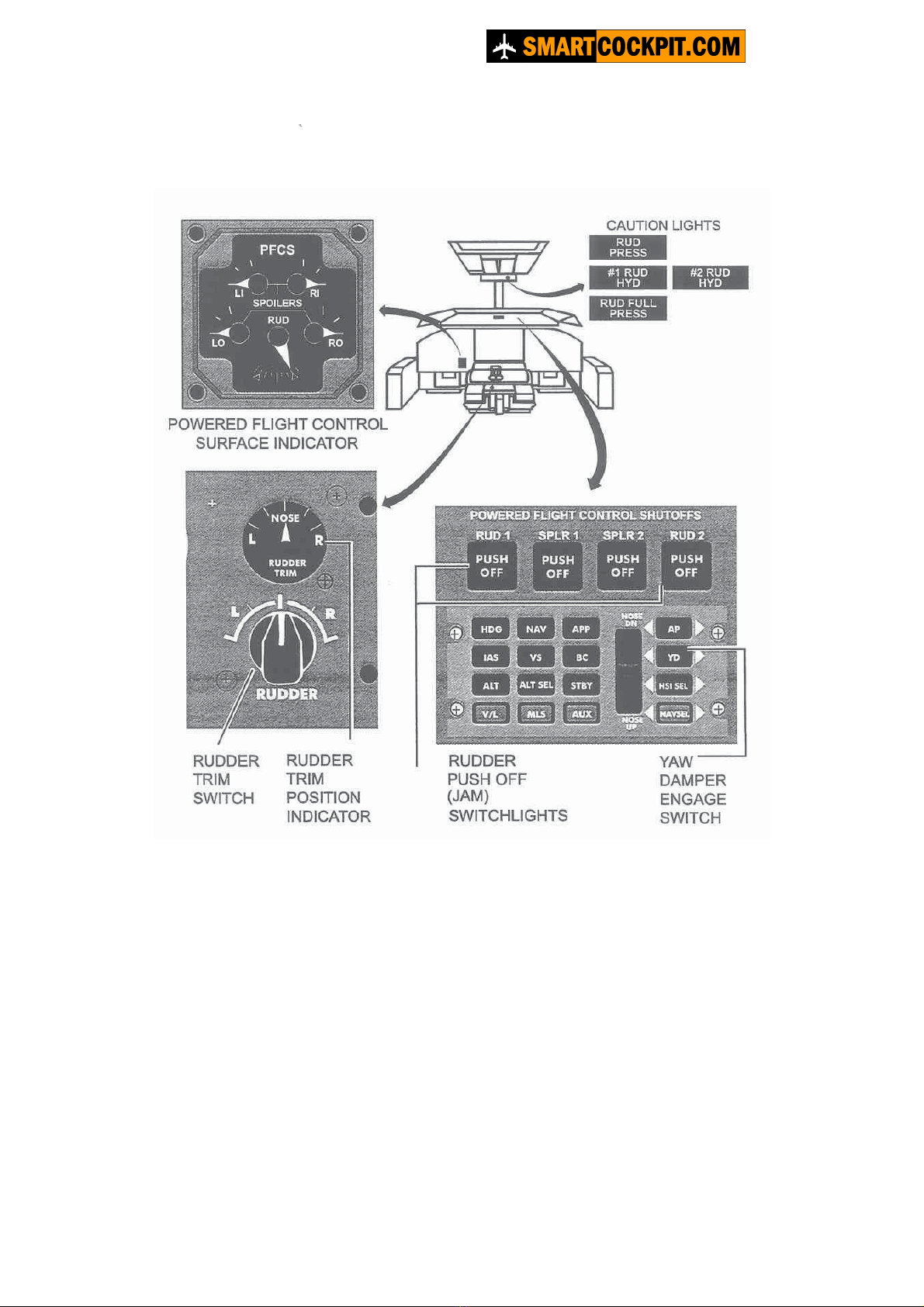
Powered flight control surface controls and indications
Dash8-200/300 - Flight Controls
Page 7
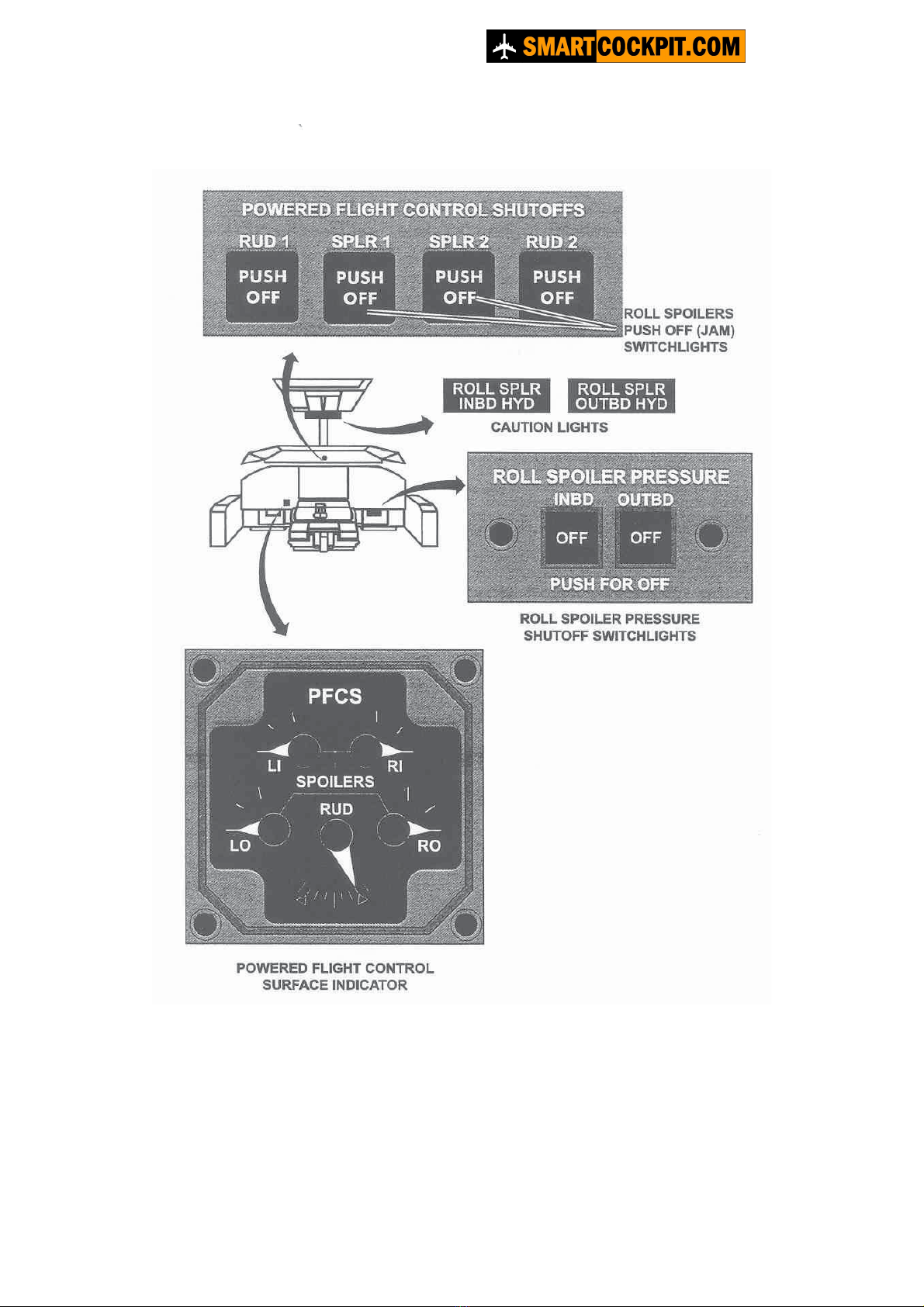
Powered flight control switches and indications
Dash8-200/300 - Flight Controls
Page 8
1SYSTEMS DESCRIPTION
General
The primary flight controls consist of ailerons and spoilers for roll control, elevator for pitch
control and a two sectioned (fore and trailing) rudder for yaw control. Roll spoilers and fore
rudder are hydraulically powered.
Secondary flight controls, consists of wing flaps and trimming systems for the primary flight
controls, and a flight control gust lock mechanism. All flight controls may be operated from
either the left or right pilots’ position.
Indications for flight control positions or malfunctions are provided by trim position indicators,
the powered flight control surface indicator and a series of caution lights.
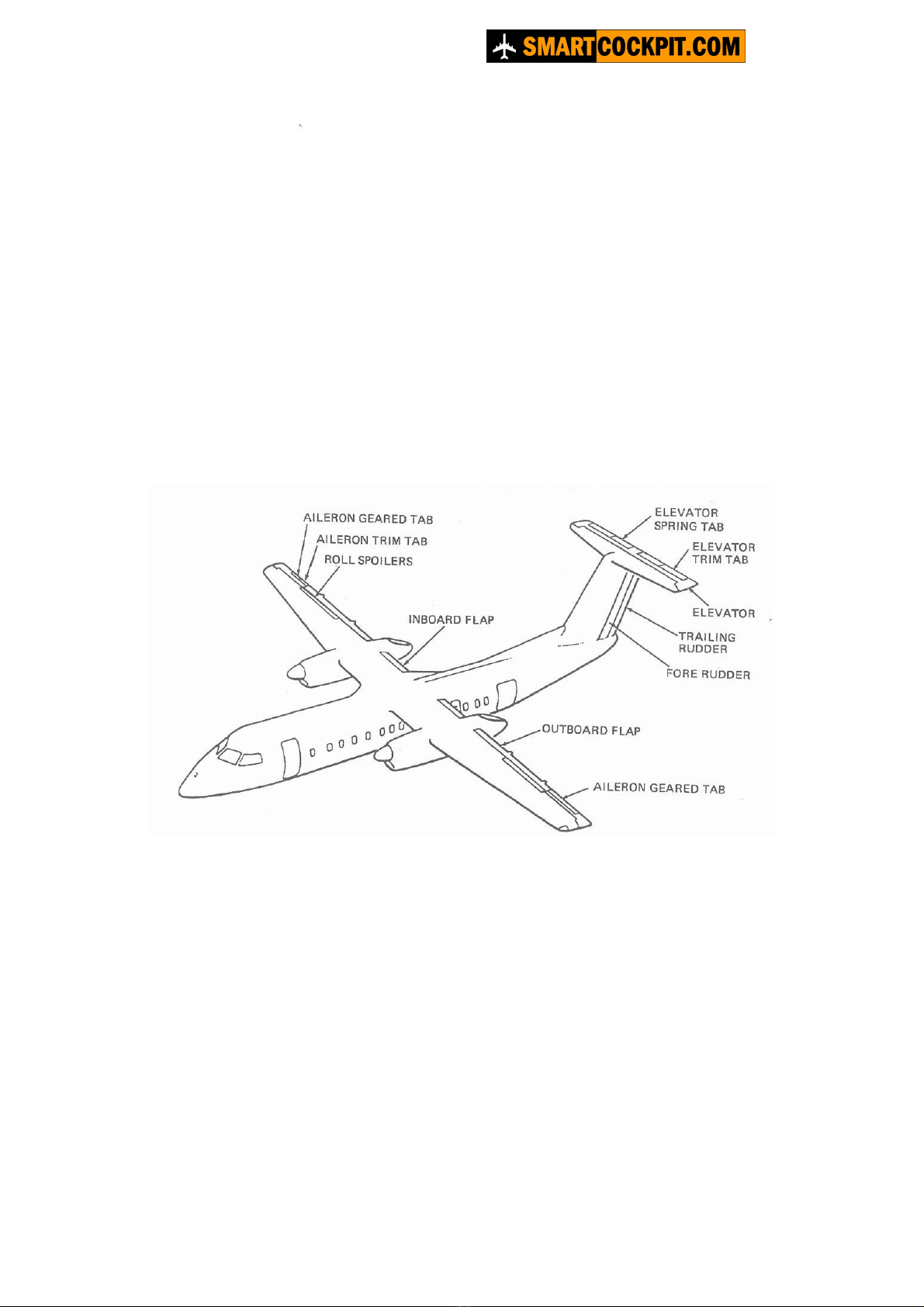
Flight control surfaces location
Dash8-200/300 - Flight Controls
Page 9

Yaw control
Directional control about the yaw axis is provided by the rudder control system. The rudder is
hydraulically powered and controlled through displacement of either pilot’s rudder pedals. A
yaw damper operates through the rudder control system to improve directional stability.
Rudder control system
The rudder has two sections (fore and trailing) driven by dual hydraulic actuators positioned
by either pilot’s rudder pedals.
The position of the rudder is shown on the PFCS indicator. Full-scale rudder deflection is
indicated by movement of the pointer to the index marks (16qleft marking, 18qright marking).
Rudder trim is provided by a two speed electric actuator, which has the capability to displace
the fore rudder 10º left or right of centre. Control of this actuator is by a spring-loaded rotary
switch on the TRIM panel to the rear of the aft electronics panel.
The fore rudder is hinged to the vertical stabilizer and is moved by both actuators. The
trailing rudder is hinged to the fore rudder and is geometrically geared to the vertical
stabilizer by push rods such that trailing rudder deflection is twice that of the fore rudder.
A pressure regulator controls hydraulic pressure to each rudder actuator. The regulator limits
actuator pressure to 1500 Psi at airspeeds below 150 KIAS and 900 Psi above 150 KIAS, in
response to speed signals from the air data computers (ADC’s), to reduce rudder sensitivity
at high speeds. Pressure switches, armed by ADC speed signals, are positioned in each
actuator's supply lines.
Maximum fore rudder travel is allowed only when the flap selector lever is out of the 0º
position to provide necessary authority at lower airspeeds. A mechanical rudder travel
restrictor limits rudder deflection to 12º with the flap selector lever at 0.
Yaw damper
A yaw damper system operates independently or in conjunction with the automatic flight
control system (AFCS) to provide compensating rudder inputs whenever the aircraft deviates
from coordinated flight. In level flight it acts to improve directional stability by damping
oscillation in yaw caused by turbulence. In turns initiated by the crew or the AFCS it provides
the necessary rudder deflection to maintain turn coordination.
Accelerometers within the flight guidance computer provide yaw data, which is combined
with other flight condition information. To provide output command signals to an electric yaw
damper actuator that can reposition the rudder up to 5º to left or right of an existing rudder
setting to maintain coordinated flight.
The yaw damper is engaged by means of an YD press-on/press-off switch light on the flight
guidance controller, located on the glareshield panel. Engaging the autopilot will
automatically switch on the yaw damper. The autopilot can not be engaged with the yaw
damper off.
Dash8-200/300 - Flight Controls
Page 10
Andere Handbücher für Dash8-200
1
Dieses Handbuch passt für folgende Modelle
1
Andere SmartCockpit Flugzeug Handbücher


