9
© Dinel, s.r.o. UL_–53
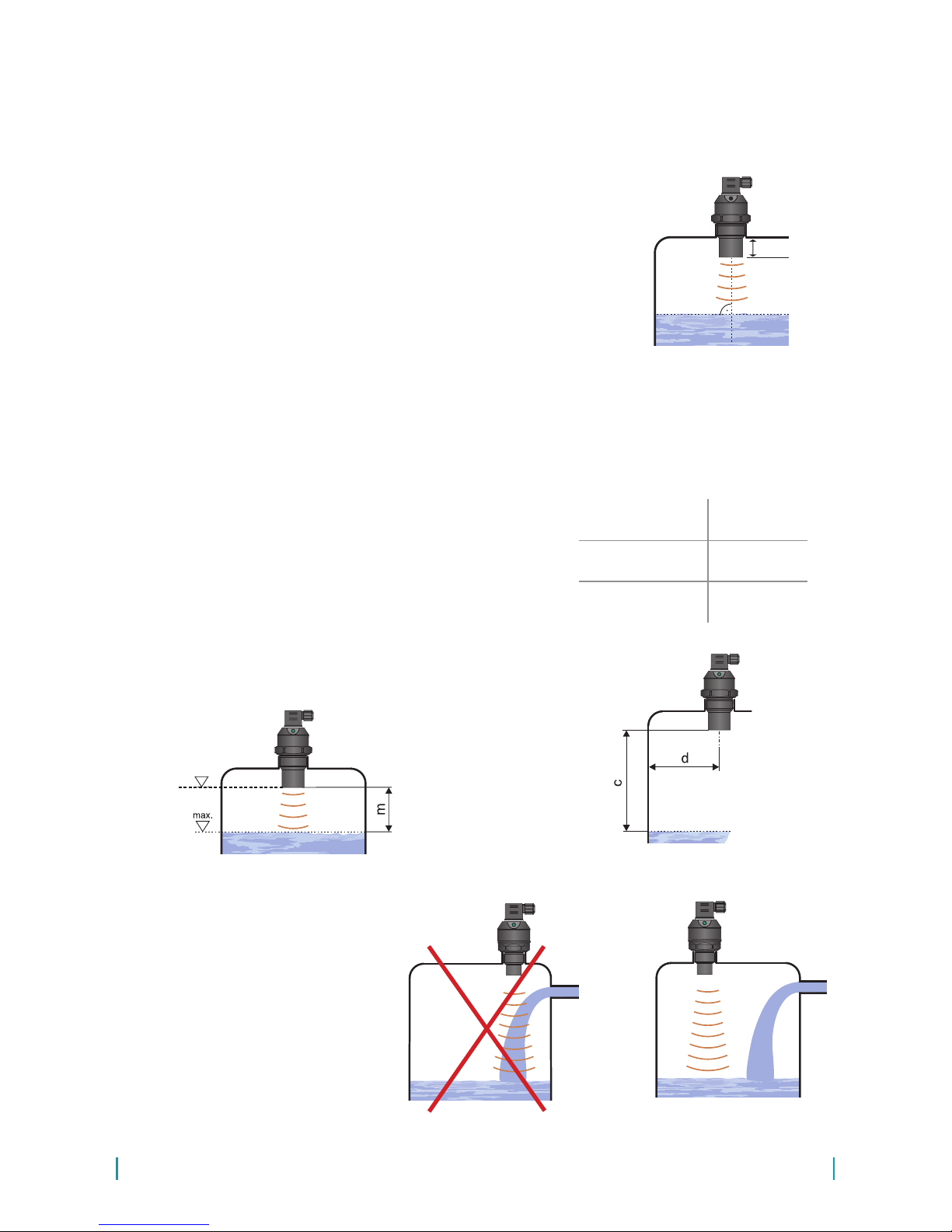
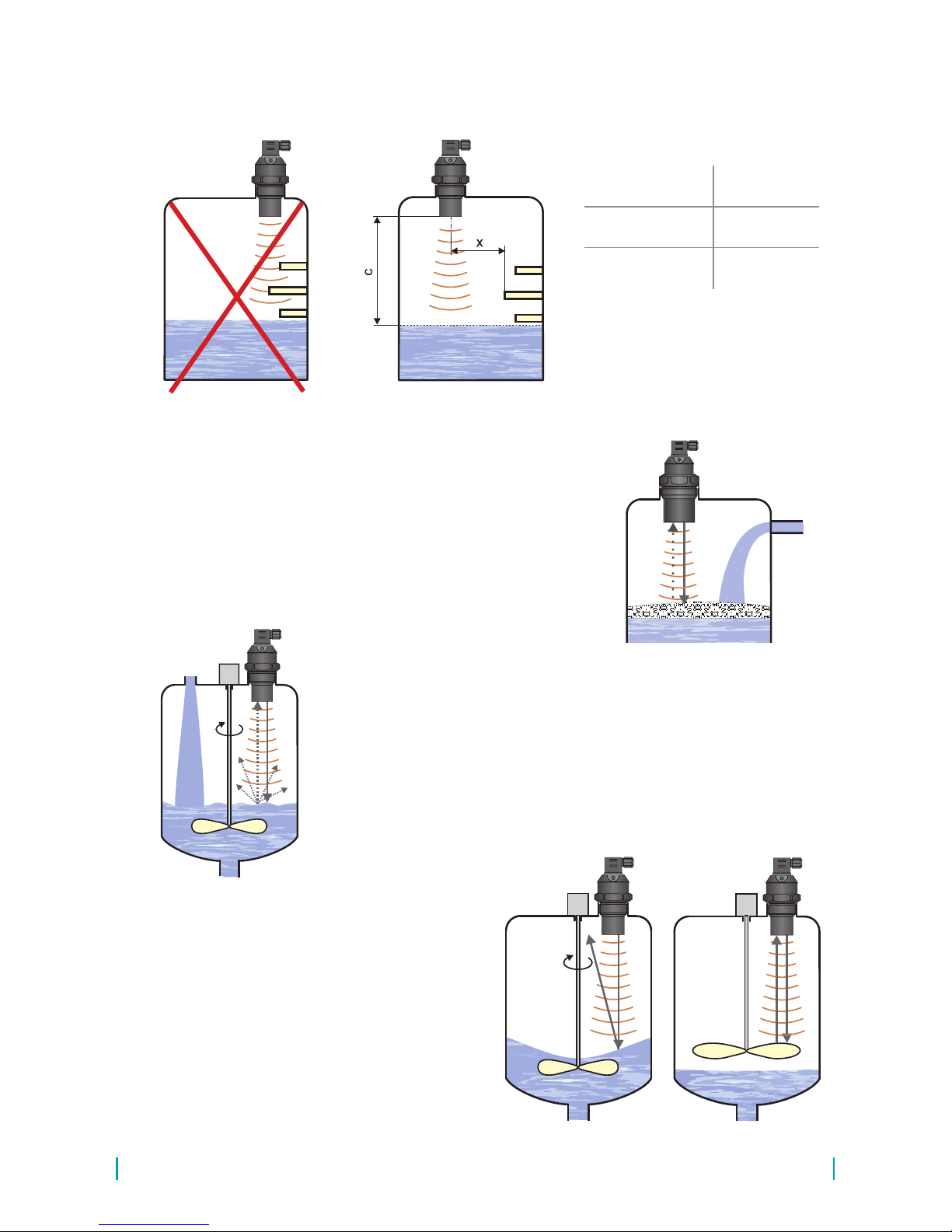
• The ultrasonic signal can be scattered or attenuated if the
surface is moderately stirred or rippled (due to a mixer, inow
of liquid, etc.). This may result in reduction of the measure-
ment range or unreliable operation of the device (Fig. 11).
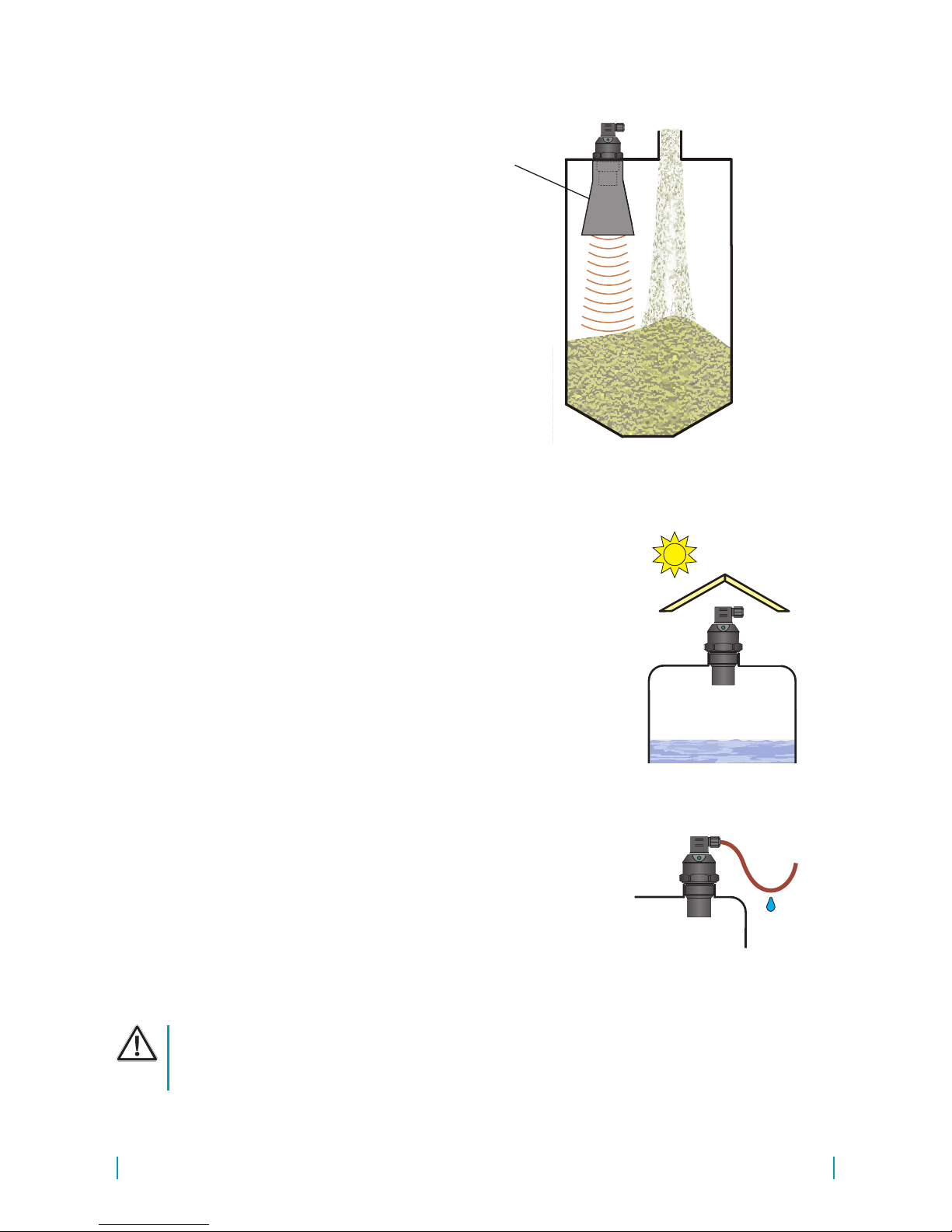
For a rippled or swirling level, you can use the directional
horn to eliminate scattering of the ultrasonic signal.
!
Fig. 11: Moderately stirred surface
• The site for installing the level meter needs to be chosen so that the emitted acoustic signal is not
affected by nearby objects (reinforcements, supports, brackets, ladders, heating elements, mixers,
etc.). These obstacles may result in false rebounds, increasing measurement inaccuracy (Fig. 9).
x – distance from the edge of the longest
object
c – maximum reach of the level meter
UL_–53–01;02 ;10 x>c/12
(min. 200mm)
UL_–53–06 x> c/8
(min. 200mm)
UL_–53–20 x> c/10
(min. 200mm)
Fig. 9: Minimum distance from close objects in the tank
• Foam may be produced on the surface of the measured liquid
during lling, mixing and other processes. The thick foam
signicantly absorbs the ultrasound signal and may cause
malfunction of the device (Fig.10). In those cases it is neces-
sary to test the device in advance or contact the manufacturer .
In case of a thin layer of foam, it is also possible to use
directional horn for improving receipt of the reected echo.
!
Fig. 10: Thick foam on the surface
!
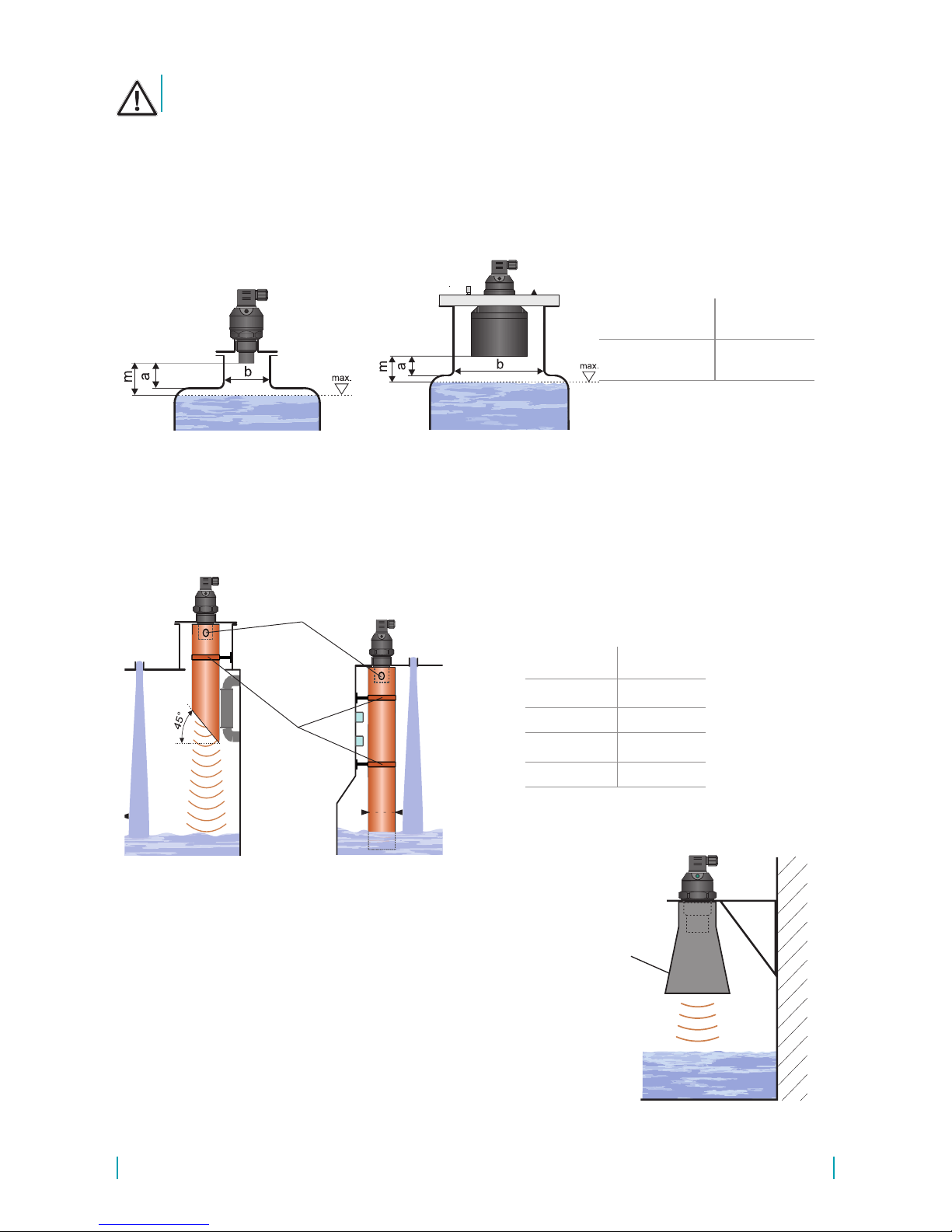
Fig. 12: Strongly stirred
surface
Fig. 13: False reection from
mixer blades
• The device should not be installed in places
with the risk of falsereections of the ultra-
sonic signal from the mixer’s blades (Fig. 13).
• False surface reections of the ultrasonic
signal and unreliable operation of the device
might result from the mixer’s rotating blades
that ripple the surface level(Fig. 12).