
Dylos DC1100 Bedienungsanleitung
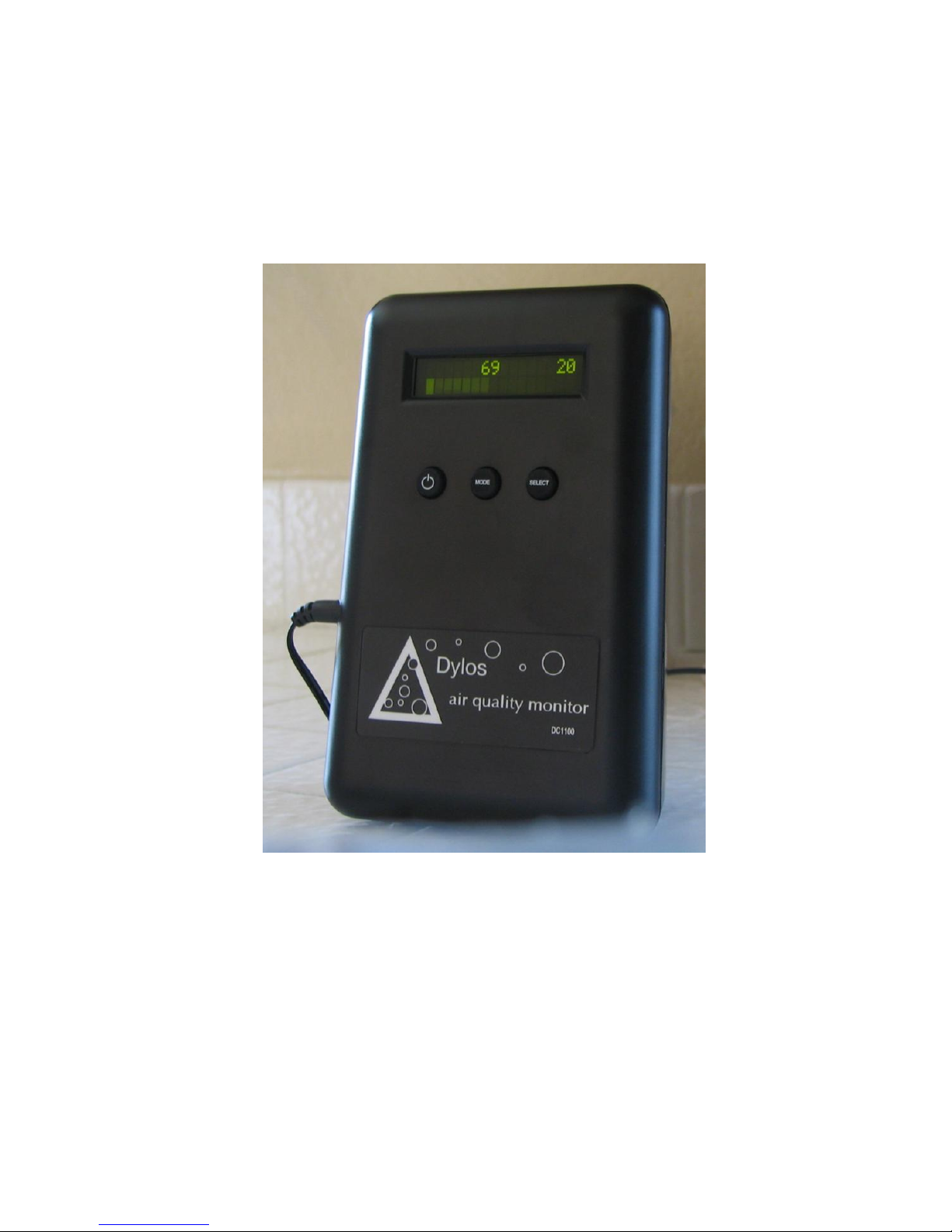
DC1100 Air Quality Monitor
DYLOS CORPORATION
Air Quality Monitoring Innovation
U.S. Patent 8009290
Foreign Pat. Pending
User Manual

Table of Contents
Introduction ................................................................................... 1
Important Safety Instructions.................................................... 1
For Best Performance............................................................... 2
Health Disclaimer...................................................................... 2
Operation ...................................................................................... 3
Operating Modes...................................................................... 5
overview 5
continuous mode 5
monitor mode 6
minute history mode 7
hour history mode 8
day history mode 9
clear history mode 11
Interpreting the data.................................................................... 12
Care and Maintenance................................................................ 13
Troubleshooting Guide................................................................ 14
Notices ........................................................................................ 15
FCC......................................................................................... 15
FDA......................................................................................... 15
Warranty...................................................................................... 16

1
Introduction
Important Safety Instructions
1. Read and keep these instructions.
2. Follow all warnings and instructions.
3. Do not attempt to open or disassemble the device. This
may result in risk of shock or exposure to laser radiation.
No serviceable parts are inside.
4. Do not use this device near water, such as a sink, wash
basin, or bathtub.
5. Do not spill any liquids onto or into the device.
6. Do not push any objects into the openings of this device.
7. Do not use any liquid or spray cleaners on the device.
Clean only with dry cloth.
8. Do not install or operate near any source of heat.
9. Operate the device only with the provided AC adaptor
connected to a power outlet of the specified rating.
10. Unplug the device and return it for service if any of the
following conditions occur.
A. The power cord and or AC adaptor has been damaged.
B. The device has had water or another liquid spilled on or
into it.
C. The device has been dropped or physically damaged.
D. The device ceases to function properly.

2
For Best Performance
1. In addition to following all the above safety precautions, it
is recommended that the DC1100 not be installed near
devices which might produce a strong electromagnetic
field, such as fluorescent lighting, as these may affect the
count accuracy. In most cases a separation of one to
several feet should be sufficient to prevent any
interference.
2. It is recommended that the DC1100 not be operated in
direct sunlight or other bright light source as this could
affect count accuracy.
3. Install the DC1100 at a location and height in the room
where you want to test the air quality. Be aware that
particulate concentrations can vary dramatically from one
location to another within the same house.
Health Disclaimer
While the DC1100 can detect levels of airborne particulates it
cannot determine the health impact for any given individual.
Respiratory ailments and allergic symptoms are caused by a
variety of factors. The DC1100 is not meant to be used in the
treatment or mitigation of any medical condition. Please consult
your physician

3
Operation
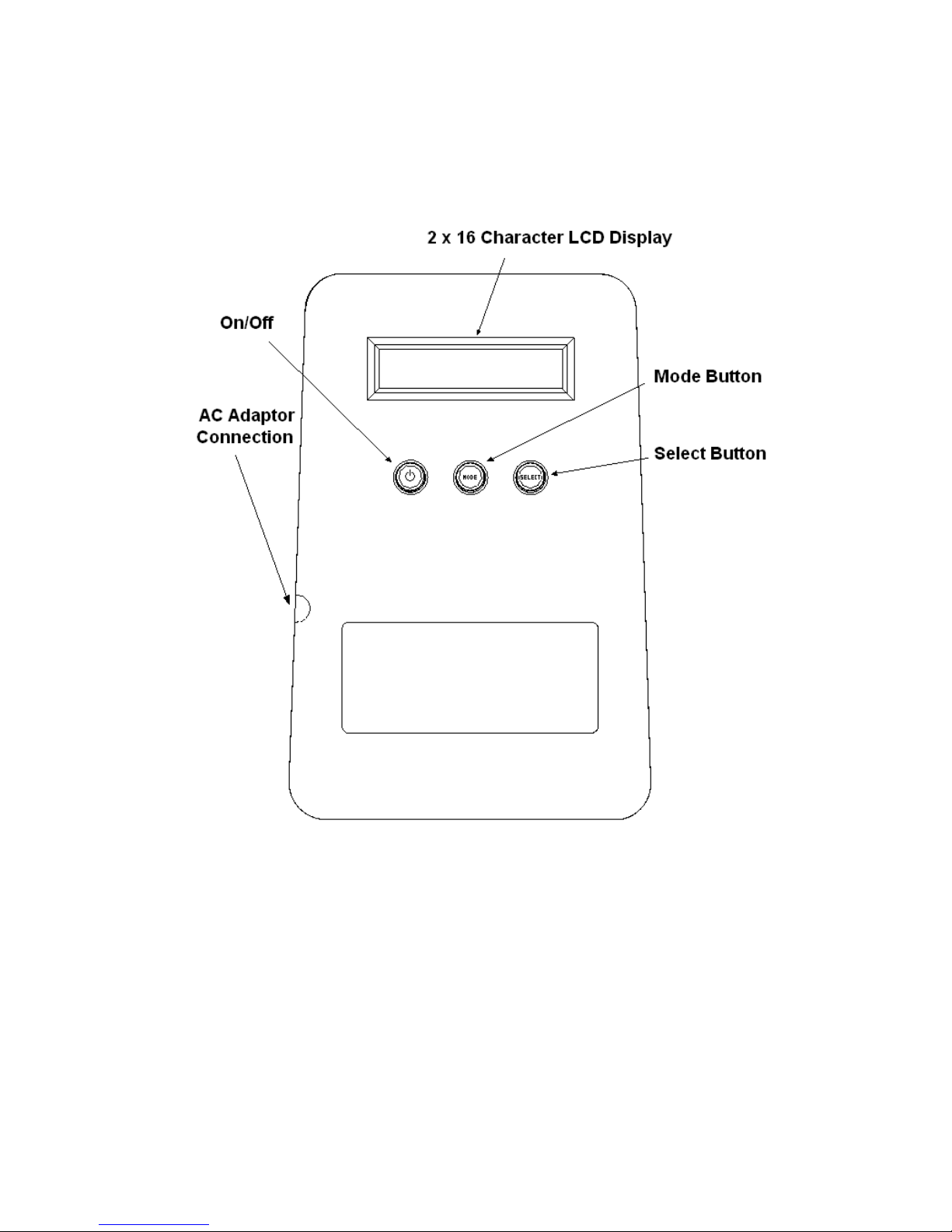
Getting started with the DC110 is simple. Just plug it in and turn
it on. First, plug the AC adaptor provided with the unit into a
120V/60Hz wall outlet. Next, connect the AC adaptor to the
DC1100 as shown in the figure. Turn the DC1100 on by pressing
the ON/OFF switch and the unit will start sampling.
4

5
Operating Modes
overview
The DC1100 has several operating modes. The user can cycle
through the various modes by pressing the MODE button.
Selections within a mode, such as viewing history data, are made
by pressing the SELECT button. In the various modes the
DC1100 will display both the small particle concentration and
large particle concentration. Small particle concentration is
always displayed to the left and large particle concentration to the
right. Small particles are all particles detected by the DC1100
down to its detection limit –approximately 1 micron. Large
particles are all particles detected above the large particle
threshold which is typically around 5 microns. The values are
scaled so that these represent the concentration of particles in
approximately .01 cubic foot of sampled air. Example of particles
that might be present in the typical home in these ranges are:
small particles: fine dust, bacteria, mold, smoke, smog, etc.
large particles: coarse dust, pollens, larger bacteria, plant
spores, dust mite feces, etc.
continuous mode
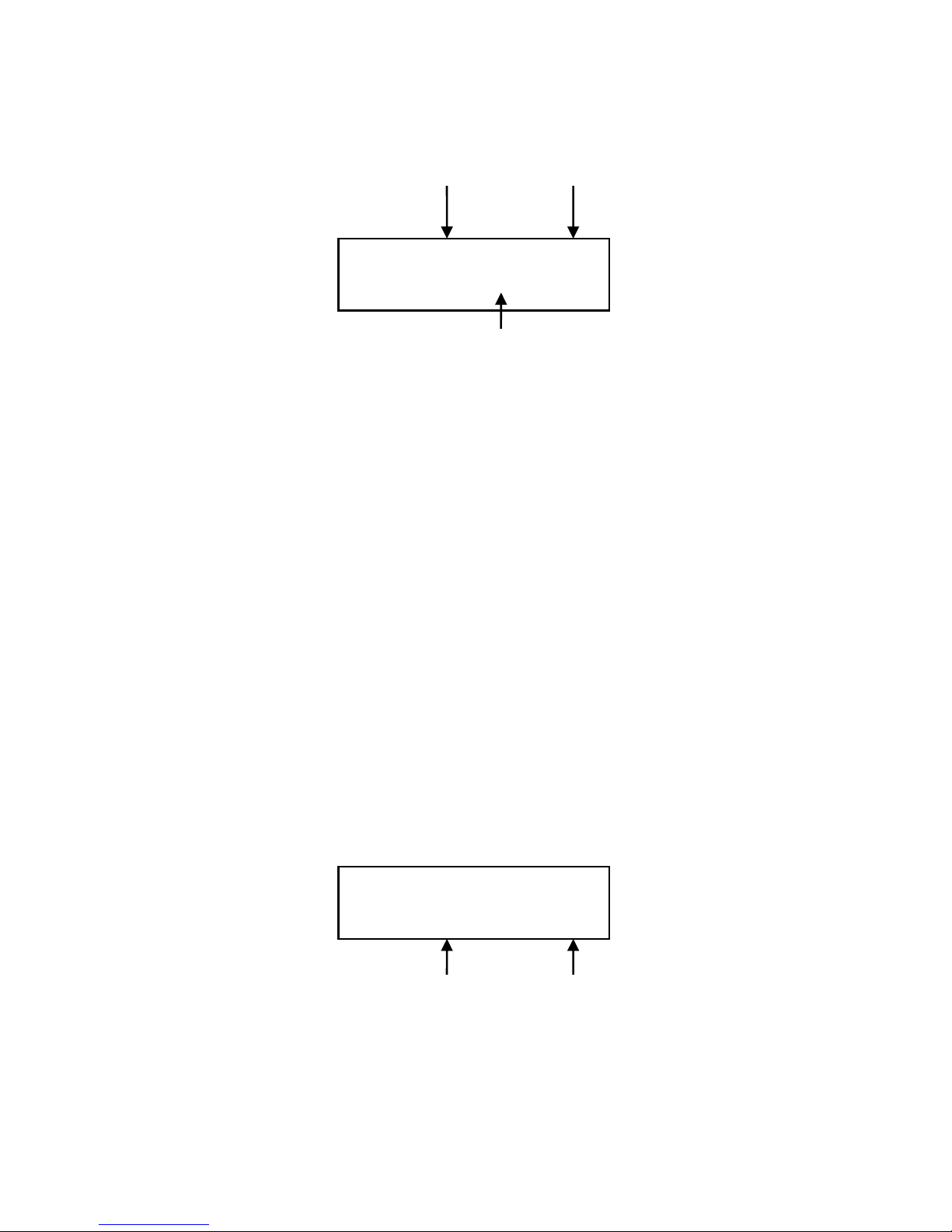
The DC1100 is simple to operate. All that needs to be done is to
plug the unit in and turn it on. Once turned on the unit will
automatically configure itself to run in continuous mode and
display the current level of particulate pollution for both small and
large particles. The data sampled will also be recorded for future
analysis. In addition, a dynamic bar graph will be displayed which
will give the user an immediate visual indicator of the number and
size of particles being detected.
6
monitor mode
In monitor mode the DC1100 will sample for one minute every
hour. The LCD will display “monitor mode” and wait until the next
hour break to begin sampling. When the unit starts sampling the
fan will come on and the word “sampling” will flash on the second
line of the LCD. At the end of the minute, the concentration of
small and large particles just sampled will be displayed as shown
in the figure
monitor mode
178 15
small particles
large particles
753 38
small particles
large particles
dynamic bar graph
smaller larger

7
minute history mode
Minute history mode allows the user to view the data recorded
over the past hour on a minute by minute basis. When minute
history mode is entered by pressing the MODE button while in
monitor mode, the following message is displayed briefly.
Then the user is instructed to press the SELECT button to start
viewing the history data.
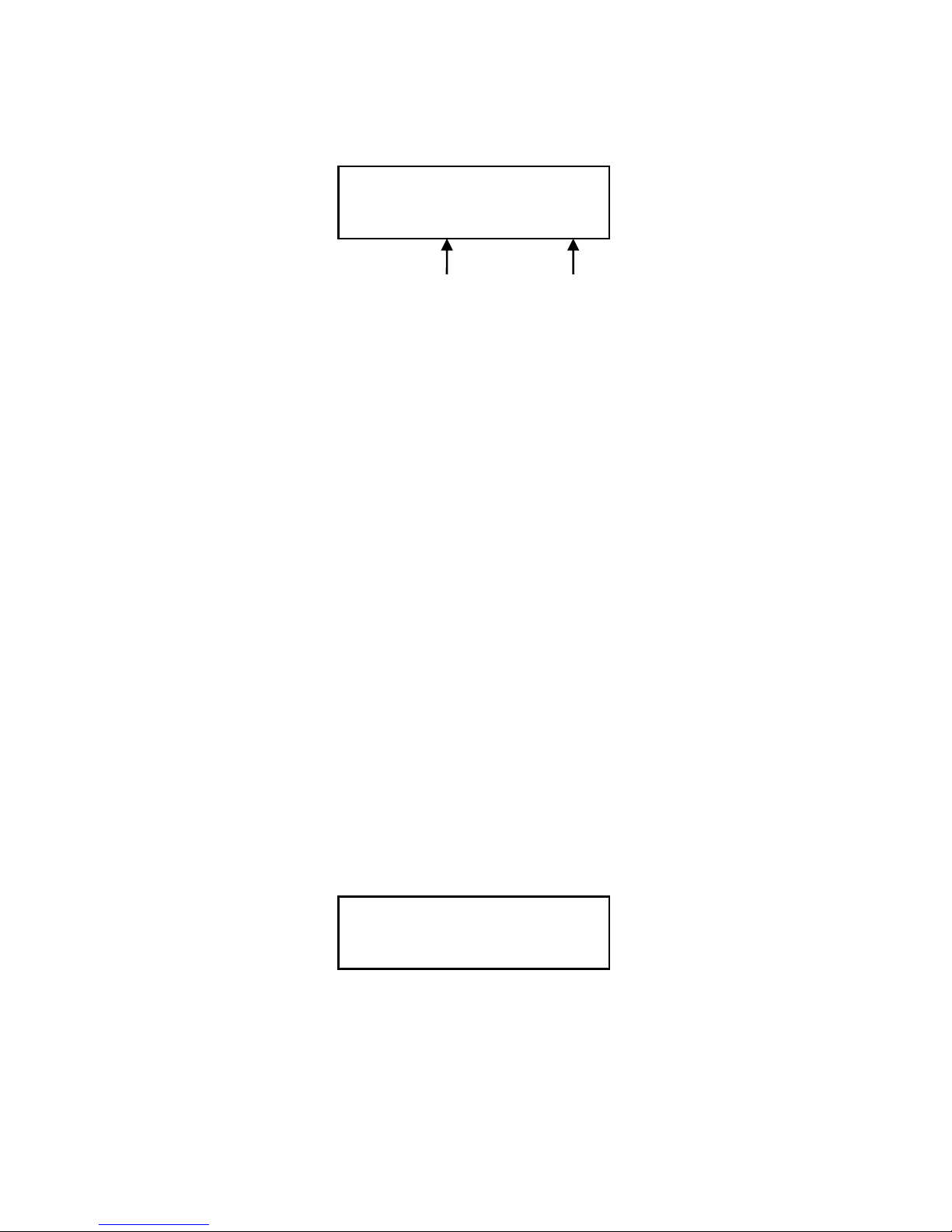
Pressing SELECT will show a display similar to the following. The
first line displays the time at which the data was recorded and the
second line shows the average concentration of small and large
particle over that minute. Pressing SELECT additional times will
allow the user to go back through the recorded data one minute at
a time.
PRESS SELECT TO
VIEW HISTORY
minute history
8
It may happen that instead of the particle concentration the
messages “NO DATA” or “TIME BREAK” are displayed. The
message “NO DATA” means that no sampling data was recorded
at that period in time. The message “TIME BREAK” alerts the
user that the displayed times past the time break are no longer
accurate. This happens if the DC1100 is unplugged which
causes the unit to lose track of time. Note: the stored data is not
lost but only the time reference from the present. Turning the unit
on and off does not effect the time as the internal clock keeps
running.
hour history mode
Hour history mode allows the user to view the data recorded over
the past day on an hour by hour basis. When hour history mode
is entered by pressing the MODE button while in minute history
mode, the following message is displayed briefly.
hour history
1 MIN AGO
328 24
small particles
large particles
Inhaltsverzeichnis
Andere Dylos Messgerät Handbücher


